Circulating Microclots Are Structurally Associated With Neutrophil Extracellular Traps and Their Amounts Are Elevated in [LC] Patients, 2025, Thierry+

forestglip

Moderator
Staff member
Now published, see post #8
-------------------------------------------


Circulating microclots are structurally associated with Neutrophil Extracellular Traps and their amounts are strongly elevated in long COVID patients

Etheresia Pretorius¹, Alain THIERRY², Cynthia Sanchez³, Tram Ha⁴, Brice Pastor⁴, Alexia Mirandola³, Ekaterina Pisareva⁵, Corinne Prevostel⁶, Gert Laubscher⁷, Tom Usher¹, Chantelle Venter¹, Simone Turner¹, Maxine Waters¹, Douglas Kell⁸
  1. Stellenbosch University
  2. INSERM / IRCM
  3. IRCM, Montpellier Cancer Research Institute, INSERM U1194, Montpellier University
  4. INSERM
  5. IRCM, Institut de Recherche en Cancé
  6. Institute of Cancer Research of Montpellier
  7. Mediclinic Stellenbosch, Stellenbosch, 7600, South Africa
  8. University of Liverpool
Abstract
BACKGROUND: The persistence of vasculo-thrombotic complications has been put forward as a possible contributing factor in the long COVID (LC) syndrome.

OBJECTIVES: Given the recently reported separate demonstration of the association of LC with elevated levels of fibrin amyloid microclots (FAM) and with those neutrophil extracellular traps (NETs), markers that are linked to thromboinflammation, this study considers the association of FAM with NETs.

RESULTS: The results show that NETs markers are quantitatively and structurally associated with the size and number of FAM in patients with LC. These markers showed a strong diagnostic performance, both independently and when combined.

CONCLUSIONS: Our study revealed that NETs may be a component of circulating FAM, We suggest that higher NETs formation promotes the stabilization of FAM in the circulation, leading to deleterious effects which contribute causally to the LC syndrome.

Competing interests
ART, EEP and BP are author of a patent: NEW METHOD TO DIAGNOSE INFLAMMATORY DISEASES 11194720 PCT application number PCT/EP2022/072147, Date of receipt 05 August 2022. EP is an author of a patent DIAGNOSTIC METHOD FOR LONG COVID PCT application number GB2105644.5. EP is a founding director of Biocode Technologies, a Stellenbosch University start-up company. ST and AT are employees of Biocode Technologies, as well as postgraduate students of EP. All other authors: no competing interests to declare.

Link (Preprint, Research Square) [Open Access]
 
Last edited:
For those of us who haven't heard of neutrophil extracellular traps before:

The Expanding Role of Extracellular Traps in Inflammation and Autoimmunity: The New Players in Casting Dark Webs
Stephanie U-Shane Huang and Kim Maree O’Sullivan*
James L. Stafford, Academic Editor
Author information Article notes Copyright and License information PMC Disclaimer

Associated Data
Data Availability Statement
Go to:

Abstract
The first description of a new form of neutrophil cell death distinct from that of apoptosis or necrosis was discovered in 2004 and coined neutrophil extracellular traps “(NETs)” or “NETosis”. Different stimuli for NET formation, and pathways that drive neutrophils to commit to NETosis have been elucidated in the years that followed. Critical enzymes required for NET formation have been discovered and targeted therapeutically. NET formation is no longer restricted to neutrophils but has been discovered in other innate cells: macrophages/monocytes, mast Cells, basophils, dendritic cells, and eosinophils. Furthermore, extracellular DNA can also be extruded from both B and T cells. It has become clear that although this mechanism is thought to enhance host defense by ensnaring bacteria within large webs of DNA to increase bactericidal killing capacity, it is also injurious to innocent bystander tissue. Proteases and enzymes released from extracellular traps (ETs), injure epithelial and endothelial cells perpetuating inflammation. In the context of autoimmunity, ETs release over 70 well-known autoantigens. ETs are associated with pathology in multiple diseases: lung diseases, vasculitis, autoimmune kidney diseases, atherosclerosis, rheumatoid arthritis, cancer, and psoriasis. Defining these pathways that drive ET release will provide insight into mechanisms of pathological insult and provide potential therapeutic targets.

...
Brinkman and colleagues [5] coined the term “neutrophil extracellular traps (NETs)” three decades after the first description of DNA release by Anker et al. [1]. Using electron and confocal microscopy, the authors were able to visualize the extrusion of fibrous structures containing DNA fibers from activated neutrophils, coated with proteins from the primary granules (neutrophil elastase, cathepsin G and myeloperoxidase), secondary granules (lactoferrin), tertiary granules (gelatinase or MMP9), and histones (H1, H2A, H2B, H3, H4, and the H2A-H2B DNA complex). The NETs were demonstrated to sequester and kill bacteria with the local delivery of antimicrobial molecules [5], the authors concluded that the sequestration of toxic granule proteins such as proteases in the fibrous structure may prevent damage to surrounding tissues. However, they also noted the release of histones may trigger the development of autoimmune conditions [5]. Since the discovery of NETs in 2004, other immune cell populations have also been characterized to release DNA structures upon stimulation. These include B cells [6,7], T cells [7,8,9], mast cells, eosinophils [10], macrophages/monocytes [11,12], basophils [13], and dendritic cells (DCs). The mechanism of DNA extrusion by these cells will be discussed later on in this review. As a variety of immune cells are capable of producing extracellular DNA traps, the mechanism will be termed ETosis to include all cell types.

While the mechanism of ETosis has been extensively studied in humans and mice since their discovery, it is a highly conserved process. ET formation has been characterized across many species, including bovine [14,15,16,17,18,19,20] porcine [21,22,23], equine [24,25,26], avian [27,28], and fish [29,30,31,32,33,34], with more recent publications adding invertebrates [35,36,37,38,39] and plants [40,41] to the repertoire. The common purpose of ETosis in these species is overwhelmingly in defense against pathogenic infection, perhaps a strategy that emerged early on in eukaryotic evolution
 
Thanks for the explanation paper @Murph which is interesting from a zoological perspective, having studied evolution, it attracts my critical eye as follows!

Re: "The Expanding Role of Extracellular Traps in Inflammation and Autoimmunity: The New Players in Casting Dark Webs"
Huang SU, O'Sullivan KM, Centre for Inflammatory Diseases, Department of Medicine, School of Clinical Sciences, Monash University, Australia.
https://www.mdpi.com/1422-0067/23/7/3793

I first noticed the title is a little lightweight and lacks intellectual rigor, as the role of ETs is not expanding, our understanding of their role is. Calling them new players fails to respect the reality which ref [42] explains, these systems have existed for hundreds of millions of years and the truth is we and our emergent cognitive capabilitites are only just learning of their existence.

Ref [42] "Multiple Origins of Extracellular DNA Traps" by Martinez et al, considers an interesting range of evidence regarding convergent evolution of ETs in multicellular organisms. Full Text - https://www.frontiersin.org/journals/immunology/articles/10.3389/fimmu.2021.621311/full

Considering those arguments in "The Expanding Role of Extracellular Traps in Inflammation and Autoimmunity..." paper, I am not sure it is quite precise enough to say "eukaryotic" evolution. Its not wrong that "eukaryotic" includes ET producing organisms but its too big a class and includes many which are not. I feel there is a useful point to be made in criticising this.

There are many single celled "eukaryotic" species. None of the evidence in either paper applies to these. It is an interesting question whether single cell species produce ETs. One would expect not, though one might envisage food catching mechanisms could preadapt a single cell species for producing ETs if it were to evolve into a multicellular species. Equally one might consider the extracellular matrix productions of bacteria in bacterial mats and stromatolites, which are definitely not eukaryotes. The argument being, there is a range of known extracellular production examples, so if one has to classify the producers of Extracellular Traps specifically, one should focus on their salient requisite characterisitic, which as ref [42] points out is multicellularity, which is a subset of all eukaryotes.

ETs appear to be a defensive strategy in the context of multicellularity, whereby cells of a multicellular organism differentiate into immune cells and work to defend the organism against being used as a food source by other species. ETs which risk the death of cells producing them as well as cells in the surrounding tissues, importantly can only evolve in the context of multicellularity, because when a single celled organism dies it cannot reproduce so the gene causing its demise is lost from the gene pool, whereas in multicells genes leading to cell death are reproduced because differentiated reproductive cells within the same organism carry the same genetic material and can create a new generation expressing these same genes which assist the reproductive success of the organism as a whole.

It may seem pedantic but in this case "multicells" is a more precise term for the general class of species producing ETs, for significant reasons. The term "eukaryotic" as used in the "Expanding Roles" paper in the phrase "perhaps a strategy that emerged early on in eukaryotic evolution" is redundant for this purpose. IMHO it should read - perhaps a strategy that emerged early on in multicellular evolution - bold mine.

This is why I think it is an interesting summary paper but a little muddled and not as scientifically rigorous as the subject deserves i.e. not top banana.
 
I am rather unimpressed by this new fashion for talkings of 'NETs'.
As far as I can see this is fibrinoid, which we all learnt about as students in 1970and which had been known about since the nineteenth century.

Neutrophil debris combines with fibrin in (extravascular) tissue areas of inflammation. I doubt it has anything to do with things going on in the circulation, where everything is moving fast and through very tiny tubes all the time.

Can we be sure that NET formation is not in fact an adaptive property of invading bacteria - which have tricked the host into providing a network of stuff to hide away in?
 
This paper doesn't look impressive to me, in fact it seems ever more concerning as it still seems like they are struggling with decent methodology when Dalton et al had already pointed out clear mistakes.

More so there is absolutely no matching between the different groups, neither in sex, age, BMI, last infection, not even comorbidities, of which there are plenty in the LC group including: Rheumatoid Arthritis, Cancer, Type 1 & 2 Diabetes, Hypertension (22% of LC group), Hyperlipideamia (24% of LC group) etc, that is to say the amount of people with Diabetes is equal to those that experience PEM in the LC group. Calling the 2 groups controls seems to be a stretch if they are not controlling for anything.

In fact looking at the cohort, it seems that these are exactly the same patients they have been publishing about for the past 3 years, whilst at the same time their collaborator Dr. Laubscher has allegedly cured LC in 100s of patients using Triple Therapy.
 
Now published as —

Circulating Microclots Are Structurally Associated With Neutrophil Extracellular Traps and Their Amounts Are Elevated in Long COVID Patients
Alain R Thierry; Tom Usher; Cynthia Sanchez; Simone Turner; Chantelle Venter; Brice Pastor; Maxine Waters; Anel Thompson; Alexia Mirandola; Ekaterina Pisareva; Corinne Prevostel; Gert J Laubscher; Douglas B Kell; Etheresia Pretorius

The persistence of vasculo-thrombotic complications has been put forward as a possible contributing factor in the Long COVID (LC) syndrome. Given the recently reported separate demonstration of the association of LC with elevated levels of heterogenous fibrin(ogen) amyloidogenic particles (microclots) and with those neutrophil extracellular traps (NETs), markers that are linked to thromboinflammation, this study considers the association of microclots with NETs.

The results show that NETs markers (Myeloperoxydase, Neutrophil Elastase, and circulating DNA) are quantitatively and structurally associated with the size and number of microclots in patients with LC. These markers showed a strong diagnostic performance, both independently and when combined.

Our study revealed that NETs may be a component of circulating microclots. We suggest that higher NETs formation might promote the stabilization of microclots in the circulation, potentially leading to deleterious effects which contribute causally to the LC syndrome.

Web | PDF | Journal of Medical Virology | Open Access
 

News Release 10-Nov-2025

Scientists reveal another piece in Long COVID puzzle​

New study reveals a structural association between circulating microclots and neutrophil extracellular traps (NETs) in patients with Long COVID. When dysregulated, this interaction may become pathogenic

Peer-Reviewed Publication
Stellenbosch University


FacebookXLinkedInWeChatBlueskyMessageWhatsAppEmail

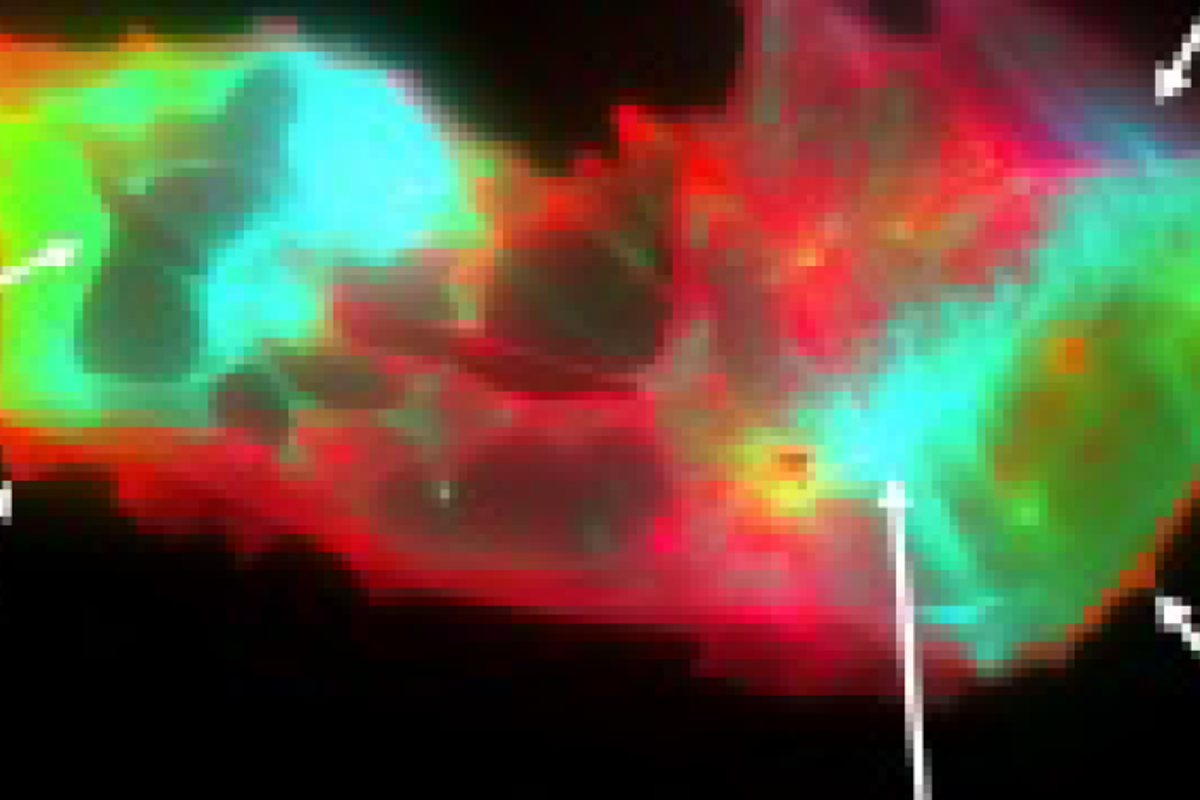
Microscope image of a microclot
image:

Microscope image of a microclot found in the blood of a person with Long COVID (enlarged 63 times). The green areas show an abnormal, sticky protein network, while the red and blue areas come from immune cellular material that has become trapped inside the microclot. Together, they form dense clumps that may block tiny blood vessels and reduce oxygen flow, a process thought to play a role in the ongoing symptoms seen in Long COVID.


view more


Credit: Dr Chantelle Venter

In patients with Long COVID, a new study has revealed structural association between circulating microclots and neutrophil extracellular traps (NETs).

This finding suggests the existence of underlying physiological interactions between microclots and NETS that, when dysregulated, may become pathogenic.

What are microclots?

The term microclots, recently adopted in the scientific literature, refers to abnormal clumps of blood clotting proteins circulating in a patient’s blood stream. The concept was introduced in 2021 by Prof Resia Pretorius from Stellenbosch University’s Department of Physiological Sciences, when they found the abnormal presence of such microclots in the blood samples of COVID-19 patients. This discovery generated widespread attention during the pandemic due to its potential role in COVID-related coagulopathies.

What are neutrophil extracellular traps (NETs)?

Dr Alain Thierry’s team at the Montpellier Cancer Institute (IRCM) at INSERM in Montpellier, was among the first to identify the critical role of NETs in the pathogenesis of COVID-19. NETs are produced through a specialised form of innate immune response known as NETosis, whereby neutrophils expel their DNA to form filamentous structures embedded with cytotoxic enzymes capable of rapidly trapping and neutralizing pathogens.

However, excessive NETs formation can become detrimental, contributing to a wide range of inflammatory and thrombotic diseases, including severe infections, autoimmune disorders, cancer, diabetes, and arthritis.

According to Dr Thierry, it may be that persistent overproduction of NETs, fueled by self-perpetuating inflammatory and thrombotic loops, exacerbates disease severity.

In a collaborative effort, the teams of Prof Pretorius and Dr. Thierry investigated the potential interaction between microclots and NETs in the context of Long COVID.

Key findings

Using imaging flow cytometry and fluorescence microscopy, they performed a quantitative and structural analysis of microclots and NETs in the plasma of Long COVID patients, compared to healthy controls. NETs were also quantified by analyzing NETs proteic markers and circulating DNA.

  • They observed a significant increase in biomarkers associated with both microclots and NETs in patient samples.
  • Microclots were not only more abundant but also larger in size among patients.
  • Most importantly, they discovered a previously unreported structural association between microclots and NETs, observed in all subjects but markedly more pronounced in Long COVID patients.
“This finding suggests the existence of underlying physiological interactions between microclots and NETs that, when dysregulated, may become pathogenic,” explains Dr Thierry.

Furthermore, the integration of Artificial Intelligence tools, such as machine learning, into the biomarker analysis enabled them to distinguish Long COVID patients from healthy individuals with high accuracy. The algorithms identified the most predictive biomarker combinations, enhancing diagnostic reliability and paving the way for personalized medicine approaches.

According to Prof Pretorius, the results reveal a significant accumulation of microclots in the plasma of Long COVID patients, likely driven and stabilized by excessive NETs production: “This interaction could render microclots more resistant to fibrinolysis, promoting their persistence in circulation and contributing to chronic microvascular complications,” she explains.

By identifying the mechanistic role of NETs in microclot stabilization, this study provides new insight into the pathophysiology of Long COVID. These findings support the development of targeted therapeutic strategies aimed at modulating thrombo-inflammatory responses.

Finally, the study paves the way for the development of novel biomarkers for diagnosis and management: “The combination of advanced imaging techniques and machine learning confers methodological robustness and contributes significantly to the ongoing scientific discourse on post-viral syndromes,” they conclude.


Journal​

Journal of Medical Virology

DOI​

10.1002/jmv.70613

Method of Research​

Imaging analysis

Subject of Research​

Cells

Article Title​

Circulating Microclots Are Structurally Associated With Neutrophil Extracellular Traps and Their Amounts Are Elevated in Long COVID Patients

Article Publication Date​

2-Oct-2025

COI Statement​

A.R.T., E.E.P., and B.P. are author of a patent: NEW METHOD TO DIAGNOSE INFLAMMATORY DISEASES 11194720 PCT application number PCT/EP2022/072147, Date of receipt 05 August 2022. A.R.T., C.V., and E.P. are an author of a patent DIAGNOSTIC METHOD FOR LONG COVID PCT application number GB2105644.5. E.P. is a founding director of Biocode Technologies, a Stellenbosch University start-up company. S.T. and A.T. are employees of Biocode Technologies, as well as postgraduate students of E.P. All other authors: no competing interests to declare.
 
Back
Top Bottom