Chronic neurobehavioral and central and autonomic nervous system effects of Tokyo subway sarin poisoning, 1998, Yokoyama et al

forestglip

Moderator
Staff member
Chronic neurobehavioral and central and autonomic nervous system effects of Tokyo subway sarin poisoning

Yokoyama, Kazuhito; Araki, Shunichi; Murata, Katsuyuki; Nishikitani, Mariko; Okumura, Tetsu; Ishimatsu, Shinichi; Takasu, Nobukatsu

Abstract
To evaluate delayed (prolonged) neurobehavioral and neurophysiological effects of acute sarin poisoning, nine male and nine female patients of the Tokyo subway sarin poisoning in Japan were examined by neurobehavioral tests, posttraumatic stress disorder (PTSD) checklist, brain evoked potentials, computerized static posturography, and electrocardiographic R-R interval variability, 6-8 months after the poisoning.

Their serum cholinesterase activities on the day of the poisoning (March 20, 1995) were 13-131 (mean 72.1) IU/L. The results suggested delayed effects on psychomotor performance, the higher and visual nervous system and the vestibulo-cerebellar system with psychiatric symptoms resulting from PTSD.

Web | DOI | Journal of Physiology-Paris | Paywall
 
This paper is about individuals who were poisoned in a terrorist attack by the neurotoxin sarin in subways in Japan in 1995. Chronic symptoms after sarin exposure are interesting because there is some evidence that sarin may have been responsible for at least some cases of gulf war illness. [1, 2]

This current paper is summarizing the results of three prior studies from the same researchers on the same 18 cases, based on examinations done 6-8 months after the attack. [3-5]

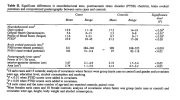
These are the results of various cognitive, neurological, and vestibular tests:
iMarkup_20260302_132340.png
Most of the p-values aren't very low, except for P300 which was p<.001, so this might be an interesting measure.
Paper said:
Similarly, the P300 (ERP) and P100 (VEP), which are considered to reflect cognitive function and the conduction time from the retinal to the visual cortex, respectively [12, 38], were prolonged in the sarin cases, indicating the delayed effects of satin on the higher and visual system. These findings essentially coincide with the observations of chronic neurological sequelae after acute organophosphate poisoning including sarin [7, 10, 30, 32, 37]

From Wikipedia for P300:
In neuroscience, the P300 (P3) wave is an event-related potential (ERP) component elicited during decision making, commonly seen in electroencephalogram (EEG) recordings. It is considered an endogenous potential,[3] as its occurrence links not to the physical attributes of a stimulus, but to a person's reaction to it. More specifically, the P300 is thought to reflect processes involved in stimulus evaluation or categorization.
Because cognitive impairment is often correlated with modifications in the P300, the waveform can be used as a measure for the efficacy of various treatments on cognitive function. Some have suggested its use as a clinical marker for precisely these reasons.

1. Robert W. Haley et al., “Evaluation of a Gene–Environment Interaction of PON1 and Low-Level Nerve Agent Exposure with Gulf War Illness: A Prevalence Case–Control Study Drawn from the U.S. Military Health Survey’s National Population Sample,” Environmental Health Perspectives 130, no. 5 (2022): 057001, https://doi.org/10.1289/EHP9009. [S4ME]

2. Lea Steele et al., “PON1 Status in Relation to Gulf War Illness: Evidence of Gene–Exposure Interactions from a Multisite Case–Control Study of 1990–1991 Gulf War Veterans,” International Journal of Environmental Research and Public Health 21, no. 8 (2024): 964, https://doi.org/10.3390/ijerph21080964. [S4ME]

3. K. Murata et al., “Asymptomatic Sequelae to Acute Sarin Poisoning in the Central and Autonomic Nervous System 6 Months after the Tokyo Subway Attack,” Journal of Neurology 244, no. 10 (1997): 601–6, https://doi.org/10.1007/s004150050153.

4. Kazuhito Yokoyama et al., “Chronic Neurobehavioral Effects of Tokyo Subway Sarin Poisoning in Relation to Posttraumatic Stress Disorder,” Archives of Environmental Health: An International Journal 53, no. 4 (1998): 249–56, https://doi.org/10.1080/00039899809605705.

5. Kazuhito Yokoyama et al., “A Preliminary Study on Delayed Vestibulo-Cerebellar Effects of Tokyo Subway Sarin Poisoning in Relation to Gender Difference: Frequency Analysis of Postural Sway,” Journal of Occupational & Environmental Medicine 40, no. 1 (1998): 17–21, https://doi.org/10.1097/00043764-199801000-00006.
 
Last edited:
Most of the p-values aren't very low, except for P300 which was p<.001, so this might be an interesting measure.
Papers posted on S4ME that mention P300:

Prefrontal dysfunction in post-COVID-19 hyposmia: an EEG/fNIRS study, 2023, Tommaso
We identified a lower concentration of oxyhemoglobin (p < 0.05) at the prefrontal cortical level in post-COVID-19 subjects during the execution of the Stroop task, as well as a reduction in the amplitude of the P3a response.

Longitudinal Exploration of Cortical Brain Activity in Cognitive Fog: An EEG Study in Patients with and without Anosmia, 2024, Gangemi et al.
The results revealed significant differences in the neurophysiological parameters of P300 and beta band rhythms in subjects affected by cognitive fog, and these alterations persist even 8 months after recovery from Covid-19. Interestingly, no significant differences were observed between the participants with anosmia and without anosmia associated with cognitive fog.

Neurophysiological and Cognitive Changes Induced by the Acute Head-Down Tilt, 2025, Sharma et al.
There were 18 healthy human subjects who participated in a 1-h 6° head-down tilt (HDT) bed rest to simulate physiological conditions during microgravity.
A significant change was found in the latency of P300 as compared to the baseline. The amplitude of the P300 wave was changed during HDT.

Do changes in cerebral blood flow modulate the amplitudes of P300 during cognitive task?, 2024, Shigehiko Ogoh et al
These findings suggest that neither increases nor decreases in [cerebral blood flow] affected cognitive function.
 
Last edited:
Searching for P300 and ME/CFS, I found one about abnormal P300 in children with CFS (the last paper below), and normal P300 in three other studies. I don't think any required PEM.

P300 assessment of chronic fatigue syndrome (1995, J Clin Neurophysiol)
The P3(00) event-related brain potential (ERP) was elicited with an auditory tone-discrimination paradigm in 25 patients diagnosed with chronic fatigue syndrome (CFS) and 25 matched normal control subjects. Target stimulus probability was varied systematically (0.20, 0.50, 0.80) in different task conditions. No differences between the CFS and control subjects were found for either P3 amplitude or latency. No group effects were observed for the N1, P2, and N2 components. Despite the attentional and immediate memory deficits reported in CFS, the P3 ERP from auditory stimuli does not reliably discriminate CFS from matched control subjects.
[Holmes 1988 and Schluederberg 1992 criteria]


Cortical motor potential alterations in chronic fatigue syndrome (1999, International Journal of Clinical Medicine)
poststimulus sensory (N100) and cognitive brain potentials (P300) did not differ in amplitude or latency.
A group of 11 patients (age range 36-49 years; 9 females, 2 males) diagnosed with CFS following CDC guidelines (1) [Holmes 1988 criteria]


Attention and short‐term memory in chronic fatigue syndrome patients (1992, Neurology)
We recorded event-related brain potentials (ERPs) from 13 patients with chronic fatigue syndrome (CFS) and 13 matched normal controls.
The patients' memory performance was not significantly different from that of the controls and there were no group differences in the overall amplitude, latency, or scalp distribution of the N1, P2, N2, or P300 components of the ERP in either paradigm.


Event-related potentials in Japanese childhood chronic fatigue syndrome (2007, Journal of Pediatric Neurology)
A total of 190 healthy children as controls and 414 patients with [childhood type chronic fatigue syndrome] CCFS participated in this study.
Forty patients (classified as Type-I) had an abnormally-prolonged P300 latency to target stimuli, and 49 patients (classified as Type-II) had an abnormally-exaggerated P300 amplitude, and the remaining 325 patients whose P300 latency and amplitude ranged below the above-mentioned threshold were classified as Type-III.
Taken together, we speculate that abnormally-prolonged P300 latency to target stimuli might be associated with learning disability and abnormally-exaggerated P300 amplitude to non-target stimuli might be associated with hypersensitivity such as phobia in patients with CCFS. Psychosomatic symptoms in patients with CCFS might be associated with higher-order level cognitive dysfunction.

Criteria:
The inclusion criteria included: (i) age ranging from 9 to 18 years and (ii) a diagnosis of CFS. The patients, aged 9 to 18 years (14.0 ± 0.9 years), were referred to our Outpatient Department between 1999 and 2002 because of symptoms diagnostic of CFS. A diagnosis of CFS was made by three raters, using the Structured Clinical Interview. Prophylactic drugs (e.g. tranquilizers) were held at least one month prior to initial assessment in the present study. All patients with CFS initially developed a low-grade fever and generalized fatigue, followed by sleep disturbance and psychosomatic symptoms; subsequently, their performance abiity deteriorated. All patients with CFS in the present study met the diagnostic criteria of CFS written in the Centers for Disease Control and Prevention [9,10] [Holmes, Fukuda]. The period of CFS symptoms exceeded six months in all patients (9.5 ± 14.2 months). Memory disturbance, fatigue, or headache started before their referral to our laboratory; frequencies of these symptoms ranged from ‘once a day’ to ‘throughout wakefulness.’ The severity of fatigue was measured using self- reported ratings based on daily activities (performance status), as reported elsewhere [16]. The mean performance status score on admission was 4.4 ± 2.4.
 
This paper says abnormal P300 amplitude is consistent in fibromyalgia, though:

Cognitive dysfunction in fibromyalgia and chronic fatigue syndrome: New trends and future directions (2006, Current Rheumatology Reports)
A consistent finding in FM patients is reduced amplitude of the p300 component compared to controls [27–29].
In contrast, two studies of ERP components in CFS patients yielded negative results [30,31], which is surprising since the finding of slow information processing in CFS suggests that ERP latencies would be increased

27. Alanoglu E, Ulas UH, Ozdag F, et al.: Auditory event-related brain potentials in fibromyalgia syndrome. Rheumatol Int 2005, 25:345–349.

28. Ozgocmen S, Yoldas T, Kamanli A, et al.: Auditory P300 event related potentials and serotonin reuptake inhibitor treatment in patients with fibromyalgia. Ann Rheum Dis 2003, 62:551–555.

29. Yoldas T, Ozgocmen S, Yildizhan H, et al.: Auditory p300 event-related potentials in fibromyalgia patients. Yonsei Med J 2003, 44:89–93
30. Scheffers MK, Johnson R Jr, Grafman J, et al.: Attention and short-term memory in chronic fatigue syndrome patients: an event-related potential analysis. Neurology 1992, 42:1667–1675.

31. Polich J, Moore AP, Wiederhold MD: P300 assessment of chronic fatigue syndrome. J Clin Neurophysiol 1995, 12:186–191
 
Back
Top Bottom