Beyond COVID-19 in people with HIV: Specific miRNA expression profile persist after SARS-CoV-2 clearance
BACKGROUND
The impact of SARS-CoV-2 on epigenetic regulation in people with HIV (PWHIV) is not well understood. MicroRNAs, key post-transcriptional regulators, may serve as biomarkers of disease. This study aimed to identify plasma miRNAs reflecting epigenetic changes in PWHIV after SARS-CoV-2 resolution.
METHODS
We sequenced plasma smallRNA from 20 PWHIV at a median of 10 weeks after SARS-CoV-2 infection, and 18 SARS-CoV-2 uninfected and unvaccinated PWHIV. MirDeep2 was used for miRNA identification, and significant differential expression (SDE) and classification performance were calculated using GLMs and PLS-DA. Correlations were performed using spearman test. Target enrichment was analyzed using miRTarbase, RNAInter, and KEGG databases, and tissue expression was analysed using the IMOTA database.
RESULTS
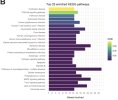
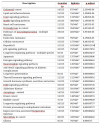
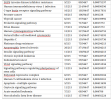
Thirty-five microRNAs were SDE between groups. Hsa-mir-181a-2–3p was correlated to time elapsed since SARS-CoV-2 infection and sampling. Functional enrichment analysis predicted 410 target genes, which in turn overrepresented 52 cellular pathways, mainly related to neurodegeneration, major signaling cascades, and oncologic and cardiovascular diseases. The most significant pathways were Huntingtons disease and PI3K-Akt signalling pathway, while those with the highest number of targeted genes were Pathways of neurodegeneration and Alzheimers disease. The hsa-miR-374b-5p showed excellent predictive ability in classifying the SARS-CoV-2 infection status in more than 93% of all instances.
CONCLUSION
SARS-CoV-2 infection in PWHIV leaves an epigenetic signature of 35 SDE microRNAs, with hsa-miR-374b-5p as a strong post-infection marker. These microRNAs regulate genes mainly involved in neurodegenerative, cardiovascular, and oncologic processes, potentially underlying post-COVID symptomatology.
Web | DOI | Journal of Infection and Public Health | Open Access
Grande-García; Llamas-Adán; Crespo-Bermejo; Lara-Aguilar; Arca-Lafuente; Martín-Carbonero; Ryan; Santos; de Lagarde; Mican-Rivera; Moreno; Resino; Berenguer; Briz; Fernández-Rodríguez
BACKGROUND
The impact of SARS-CoV-2 on epigenetic regulation in people with HIV (PWHIV) is not well understood. MicroRNAs, key post-transcriptional regulators, may serve as biomarkers of disease. This study aimed to identify plasma miRNAs reflecting epigenetic changes in PWHIV after SARS-CoV-2 resolution.
METHODS
We sequenced plasma smallRNA from 20 PWHIV at a median of 10 weeks after SARS-CoV-2 infection, and 18 SARS-CoV-2 uninfected and unvaccinated PWHIV. MirDeep2 was used for miRNA identification, and significant differential expression (SDE) and classification performance were calculated using GLMs and PLS-DA. Correlations were performed using spearman test. Target enrichment was analyzed using miRTarbase, RNAInter, and KEGG databases, and tissue expression was analysed using the IMOTA database.
RESULTS
Thirty-five microRNAs were SDE between groups. Hsa-mir-181a-2–3p was correlated to time elapsed since SARS-CoV-2 infection and sampling. Functional enrichment analysis predicted 410 target genes, which in turn overrepresented 52 cellular pathways, mainly related to neurodegeneration, major signaling cascades, and oncologic and cardiovascular diseases. The most significant pathways were Huntingtons disease and PI3K-Akt signalling pathway, while those with the highest number of targeted genes were Pathways of neurodegeneration and Alzheimers disease. The hsa-miR-374b-5p showed excellent predictive ability in classifying the SARS-CoV-2 infection status in more than 93% of all instances.
CONCLUSION
SARS-CoV-2 infection in PWHIV leaves an epigenetic signature of 35 SDE microRNAs, with hsa-miR-374b-5p as a strong post-infection marker. These microRNAs regulate genes mainly involved in neurodegenerative, cardiovascular, and oncologic processes, potentially underlying post-COVID symptomatology.
Web | DOI | Journal of Infection and Public Health | Open Access