

Arfmeister
Senior Member (Voting Rights)
Association of structural brain changes with cognitive deficits and fatigue in patients with post COVID-19 condition
Abstract
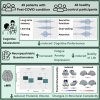
Cognitive impairment and fatigue are frequent symptoms in patients with post COVID-19 condition (PCC). However, cognitive issues are often only self-reported and not compared to well-matched control groups. Furthermore, structural brain changes, underlying cognitive impairment, and fatigue in post COVID-19 condition are still not fully understood. To assess cognitive deficits, fatigue, neuropsychiatric symptoms and quality of life in patients with post COVID-19 condition, determine changes in brain volumes, cortical thickness and regional shape complexity and assess correlations of imaging measures with clinical symptoms, 49 patients with post COVID-19 condition (80% female) with a confirmed SARS-CoV-2-infection at least 3 months prior to testing and new onset of cognitive complaints and 48 healthy controls matched for sex, age and education level underwent comprehensive neuropsychological testing, MRI-based volumetric analyses and fractal dimensionality analysis to evaluate structural brain complexity. Neuropsychiatric symptoms and quality of life were assessed using questionnaires. Patients with post COVID-19 condition exhibited significant deficits of attention, executive functions, phonemic and semantic fluency, verbal learning and episodic and visuospatial memory (all p(corrected)=.002 - <.001).
Cognitive impairments were not linked to the severity of the initial COVID-19 infection, but attention performance significantly impacted daily functioning. Patients had significantly lower quality of life and higher levels of anxiety, depressive symptoms and fatigue compared to controls (all p(corrected)<.001) and were severely impacted in their working ability with 45% being unable to work. Thalamic volumes were significantly reduced in patients with post COVID-19 condition (p(corrected)=.001 - <.001). Fractal dimensionality analyses showed increased complexity in the occipital lobes and hippocampal fimbriae, and reduced complexity in the thalamus bilaterally in patients. Thalamic complexity reductions correlated with increased fatigue severity in patients and controls.
Patients with post COVID-19 condition display a wide spectrum of cognitive deficits, increased levels of fatigue, anxiety and depressive symptoms and reduced quality of life. MRI analyses revealed reduced thalamic volumes and reduced thalamic complexity that was associated with fatigue severity across the whole sample. These findings identify brain structural correlates of key symptoms in post COVID-19 condition and highlight the value of fractal dimensionality analysis to detect clinically relevant structural brain alterations that remain undetected in conventional analyses.
Graphical Abstract
Abstract
Cognitive impairment and fatigue are frequent symptoms in patients with post COVID-19 condition (PCC). However, cognitive issues are often only self-reported and not compared to well-matched control groups. Furthermore, structural brain changes, underlying cognitive impairment, and fatigue in post COVID-19 condition are still not fully understood. To assess cognitive deficits, fatigue, neuropsychiatric symptoms and quality of life in patients with post COVID-19 condition, determine changes in brain volumes, cortical thickness and regional shape complexity and assess correlations of imaging measures with clinical symptoms, 49 patients with post COVID-19 condition (80% female) with a confirmed SARS-CoV-2-infection at least 3 months prior to testing and new onset of cognitive complaints and 48 healthy controls matched for sex, age and education level underwent comprehensive neuropsychological testing, MRI-based volumetric analyses and fractal dimensionality analysis to evaluate structural brain complexity. Neuropsychiatric symptoms and quality of life were assessed using questionnaires. Patients with post COVID-19 condition exhibited significant deficits of attention, executive functions, phonemic and semantic fluency, verbal learning and episodic and visuospatial memory (all p(corrected)=.002 - <.001).
Cognitive impairments were not linked to the severity of the initial COVID-19 infection, but attention performance significantly impacted daily functioning. Patients had significantly lower quality of life and higher levels of anxiety, depressive symptoms and fatigue compared to controls (all p(corrected)<.001) and were severely impacted in their working ability with 45% being unable to work. Thalamic volumes were significantly reduced in patients with post COVID-19 condition (p(corrected)=.001 - <.001). Fractal dimensionality analyses showed increased complexity in the occipital lobes and hippocampal fimbriae, and reduced complexity in the thalamus bilaterally in patients. Thalamic complexity reductions correlated with increased fatigue severity in patients and controls.
Patients with post COVID-19 condition display a wide spectrum of cognitive deficits, increased levels of fatigue, anxiety and depressive symptoms and reduced quality of life. MRI analyses revealed reduced thalamic volumes and reduced thalamic complexity that was associated with fatigue severity across the whole sample. These findings identify brain structural correlates of key symptoms in post COVID-19 condition and highlight the value of fractal dimensionality analysis to detect clinically relevant structural brain alterations that remain undetected in conventional analyses.
Graphical Abstract
Last edited:


