A thread on what people with ME/CFS need in the way of service

It would be very difficult to make a legal or medical argument against specialised and adapted nursing/care home spots for the very severe once ME/CFS gets the proper recognition, at least if nursing/care homes are already government funded in your country.

The CRPD in EU might also have something to say about it.
Which seems to be the main obstacle. Recognition means obligation means a temporary increase in direct expenses, mostly shifted from indirect losses, and would take years to pay off. It would mean billions in expenses for most countries, all for massive savings and benefits in the future, but in a context in which almost no one believes it will actually work anyway.

I don't think there's anything else here. It's seen as too big and expensive and, in a perverse way, this makes it easier to perpetuate, since most people can't believe governments and medical professionals would make such a, frankly sociopathic, calculation on such a large scale. And yet they always make that calculation the same way, because there are never any consequences anyway.

So in working out what competent clinical services would be like, such cost problems can be ignored since nothing will happen unless those problems are removed. This means there can't really be any transition between the current disaster and a competent, humane system. Because like every single thing we are blamed for, the entire approach here is all or nothing, with nothing in-between. It can only happen in a radical shift, decades of attempts at a gradual one and the ongoing disastrous mishandling of LC have made that perfectly clear.
 
It can only happen in a radical shift, decades of attempts at a gradual one and the ongoing disastrous mishandling of LC have made that perfectly clear.

I agree. I put it to the DHSC that a complete change of format was needed but there was no acknowledgement. The prosed model would probably cost no more. A large number of unnecessary salaries for useless sessions assesed by equally useless PROMS could be cut.
 
I don't think any place in current hospitals is good enough for the very severe. Building properly sound and light insulated rooms would be very expensive as major construction would be requested. But that is the bare minimum - place without stimulation so a person can properly rest.
There was a recent story about two low stimuli rooms being created in a hospital in Norway. The ME/CFS patients were never allowed to stay in them, but they were always in use because (to nobody’s surprise) some people need a quieter environment.
 
this makes it easier to perpetuate, since most people can't believe governments and medical professionals would make such a, frankly sociopathic, calculation on such a large scale.
Yep, I literally can't talk to non disabled friends about how bad things are because I'll sound crazy.


It can only happen in a radical shift, decades of attempts at a gradual one and the ongoing disastrous mishandling of LC have made that perfectly clear.
Agreed - appeasing these people just means that they coopt our campaigns to increase their budget. We need a total change, a clean slate.
 
It would be good if there were lists that actually covered specific care items like glasses and dental hygiene.
I think most opticians do home eye tests. I’ve had my eyes tests at home for free (because I’m on means-tested benefit I think) by an independent optician and by Specsavers. I also got vouchers which covered the cost of the cheaper glasses.

I believe some NHS dentists offer domiciliary services but it’s hard to find an NHS dentist providing any sort of services these days.
 
Taking Robert's list as a very reasonable looking framework for what seems to have emerged as a near consensus, not just here but talking to physicians elsewhere, I wonder about some tweakings:
This looks good to me. What now?

On the other thread you wrote:
It might be useful to get input from physicians like Amolak Bansal and Saul Berkovitz who in the past have provided services. Or any other physicians people have been impressed with.
I think it would be good to get some input from such people and to ask if they would be willing to be signatories.

Who else might be useful to have as initial signatories? Would it be worth asking Stephen Holgate? The charities?

Is the idea to send it to the DHSC and put a copy on the parliament petitions website?
 
Last edited:
It would be very difficult to make a legal or medical argument against specialised and adapted nursing/care home spots for the very severe once ME/CFS gets the proper recognition, at least if nursing/care homes are already government funded in your country.

The CRPD in EU might also have something to say about it.
I think the wording of this needs to be very careful to each country as to specifically what is needed and meant here.

But agree there is the hospital/ maybe hospice bit and also something to do with support for care and those who might be in suitable homes and need to have them adapted or move to more appropriate (if it’s a flat with no lift or major noise issues that can’t be addressed) and the combo of the two, there’s some part where this overlaps healthcare vs home that I’m hoping someone else can help with the words for.

I think in uk there was recently a year or two a go a push for temporarily getting eg older people into ‘interim’ types of care home instead of a hospital bed in the bit after operation but before their home is set up and they are fully recovered enough for them to return as a sort of bed blocking solution too but don’t know where that’s at and if it’s all changed and how that needs to be something to be aware of if it’s a default when planning for those pwme who are iller or have a critical situation etc

And it seems that needing some proper knowledge of the illness at those more severe ends is important here as how do you deal with what looks hard as it is (or even the simpler end of it like wheelchairs ) without good medical notes to back up and describe the needs in the first place.

It leaves to people being stranded as default (unless they are extraordinarily fortunate with the support they have and then knowing what they are doing too) after a certain level of severity I think unless also you were lucky enough to be in good accommodation that suits the illness before getting ill and other things to do with care.

there is a need for a thread (or combo of them) on that care-hospital bit I think which particularly affects severe-very severe. which I can’t work out at the moment what to construct them as because I’ve a lot in atm and am unknowledgeable on how the whole dude of this stuff work ld on this

Ive seen another article on someone else not me/cfs talking about care disaster situations again today - a 33yr old who went into hospital and now is getting sent to a care home

Then imagine the issue here if even if that was wanted and/or needed for me/cfs person who was older there is no medical knowledge/acknowledgement to make sure such places can be good for the needs of a pwme too?

so its a live issue obviously even beyond the illness to add on to the complications and I think it would be useful to have some thread keeping track of this and making sense of the different parts a bit (as well as of course ones for discussion) so we can stay abreast of what the situation is really like out there

And it affects hospitals care because some of the worst situations involve people being stuck in hospitals for years which isn’t ideal for patient or hospital due to gaps in that domicilliary side of things too

There seem to be so many gaps or battle between ‘whose responsibility’ and arguments about what is actually needed / preferred cheapest way vs patient need or independence etc putting aside me/cfs that when you add that on top not having a source of info backed up you can see why the ‘hopeful ideas’ side of things when someone does a roundtable for ‘the problem’ rather than seeing it as a patient becomes counterproductive . So it’s not just about asks but how does a bad situation exactly ever get to a sustainable endpoint where a very ill person doesn’t just spend their live being in the middle of battles.

Here is the fb link which is good as lots of the comments give an idea of others in similar


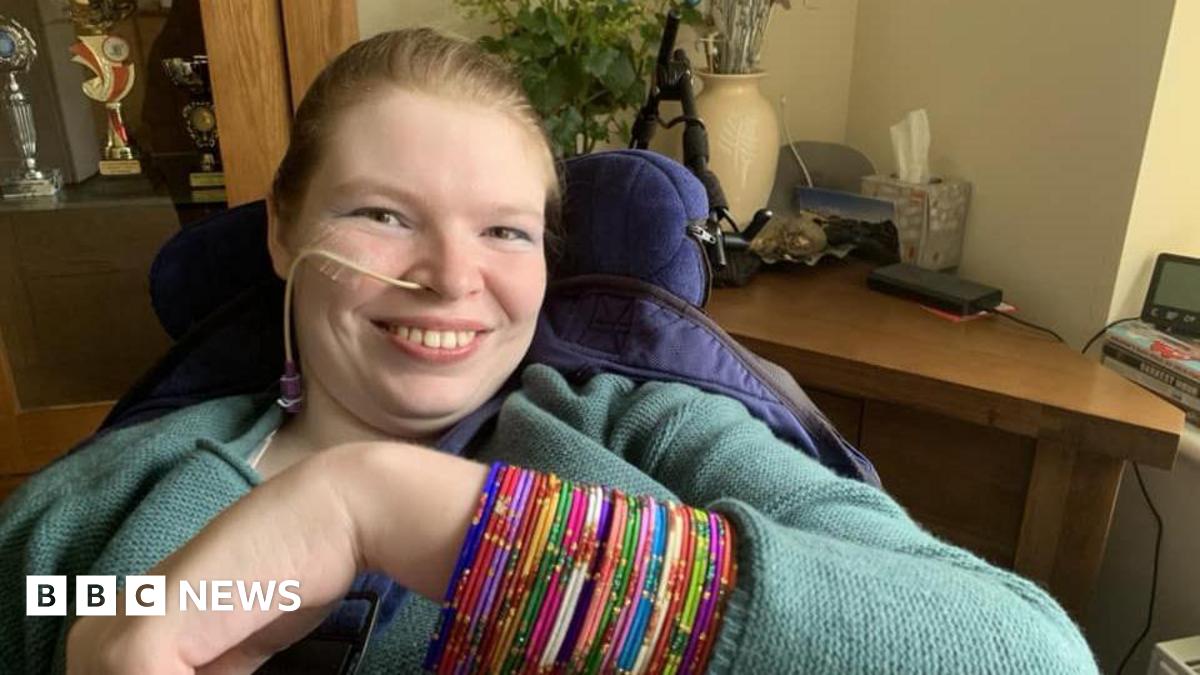
The bbc news article

 
Last edited:
Also, I wonder if a peer advice project would be useful, where people who've been ill quite a long time could contribute paragraphs about the journey they went on. For instance:
  • clinging to the belief there must be something that helps, followed by trying anything and everything to no avail;

  • suspecting they may have made their illness worse by trying too hard to keep up their lives;

  • discovering there are patients who've been harmed by inappropriate advice, which was given to them by reputable healthcare institutions and medical professionals;

  • learning that most ME/CFS research ranges from useless to fraud-adjacent, and it doesn't take long to get the hang of how to spot it;

  • realising people who claim to be experts usually aren't – real experts admit they know almost nothing;

  • grasping the sheer scale of crappy alternative medicine that is thrust in our faces at every turn, most of which is useless and some of which is risky;

  • the whole internet thing – misinformation from other patients, private doctors offering expensive and unproven treatments, the mushrooming of so-called syndromes.
That's great Kitty. I'd like to see something like that incorporated into the S4ME website. Perhaps it could be achieved by paragraphs of experiences illustrating each point, contributed by members.

6. Dedicated units for crisis care for very severe ME/CFS cases, under a physician with a special interest, with protocols for providing ME/CFS-suitable inpatient beds in association with nutritional units for feeding support in regional hospital centres.
As @bobbler notes, there is the issue of ongoing care as well. Not everyone with very severe ME/CFS has family who are able to take appropriate care of them. At the very least, respite care, in the case for example where the primary carer of a person with very severe ME/CFS has to go have a hip replacement operation or something. Perhaps it's another issue for another time, but it's a significant problem.

I'd add to the list of requirements that there needs to be a facility for Telehealth i.e. video consultations, phone consultations.
 
I would like physicians to be able to prescribe drugs off-label as small scale open label studies in the first instance – as I think Fluge and Mella did with Rituximab in the first instance.

My understanding is that Fluge and Mella noted improvements in cancer patients and then did a small, but controlled and blinded phase II study (with open label extension). The pilot Daratumumab study did not have a placebo group but it was set up in such a way as to provide some useful information. The term 'controlled' here is intended in the sense of 'with adequate controls for answering relevant questions' - i.e. in a sense in which PACE was not controlled but a pharmacodynamic study with no placebo group and meaningful historical control data may be.

To put it another way, I think doctors should be banned from using drugs off label other than in what are generally regarded as controlled trials unless they are, like Fluge and Mella, people who have a deeper understanding of what an adequately controlled experiment is.
 
I think it would be good to get some input from such people and to ask if they would be willing to be signatories.

Who else might be useful to have as initial signatories? Would it be worth asking Stephen Holgate? The charities?

Is the idea to send it to the DHSC and put a copy on the parliament petitions website?

I don't think trying to gather lots of signatories would be a good idea here. there are too many competing political interests. At this stage I am not sure that a signed letter is the way to go in fact.

I have been asked not to pass on information from what has been said at ForwardME meetings but I think I should mention that the ForwardME services subgroup has expressed interest in the idea of writing a specification and giving it to DHSC. I would like to feed back anything developed here to them.
 
Thank you for your work on this, @Jonathan Edwards.
I think this thread serves a dual purpose, or possibly multiple purposes, not just your work with Forward ME.

For example, I think it would be a good basis for a fact sheet or article to put on our website when we have one. It would need to be internationally relevant, not specific to the UK NHS.

It might also form the basis of a future advocacy campaign locally, nationally or internationally, including a petition addressed to providers and funders of medical and care services. Also to try to inform and influence ME/CFS patient organisations.
 
As @bobbler notes, there is the issue of ongoing care as well. Not everyone with very severe ME/CFS has family who are able to take appropriate care of them. At the very least, respite care, in the case for example where the primary carer of a person with very severe ME/CFS has to go have a hip replacement operation or something. Perhaps it's another issue for another time, but it's a significant problem.

I'd add to the list of requirements that there needs to be a facility for Telehealth i.e. video consultations, phone consultations.

I will add those in. It may be getting a bit messy but format can be reviewed.
 
There was a recent story about two low stimuli rooms being created in a hospital in Norway. The ME/CFS patients were never allowed to stay in them, but they were always in use because (to nobody’s surprise) some people need a quieter environment.
I think it used to be the case, and might still be, that two dedicated ME beds were at the Southport hospital on the Gold Coast, Australia. I have not heard more about this in a long time, but the occasional private room or small ward could be modified to some extent, especially in how it operates, without major overhaul. Purpose built systems are good, but any improvement is still an improvement.

However the actual construction aside, strong guidelines on how to help ME patients, endorsed by the medical establishment, would be highly desirable. Should any staff be unaware, the guidelines could be provided quickly, a simple download.

In my state patients who carry an antibiotic resistant bacteria must be put in a private room or a dedicated ward. Its entirely possible that the same could happen with ME patients, its a matter of will, law and organization, not rocket science. Perfecting these things will take time and effort and medical research however, and will be much easier to get once we have proven cause or treatments. Convincing the hospital system of the need is the big hurdle, especially when we do not have a highly reliable diagnostic test outside the research world, and in research they are all still under investigation. We also lack large scale studies that reliably identify symptoms and physiology. This could change rapidly however, given recent conference announcements.
 
I wonder whether in the UK situation it may be possible for the NHS to be required to use a local private hospital or hospice for people with very severe ME/CFS, given that I understand they tend to have more private rooms and possibly quieter environments and more capacity to be flexible with lighting, visitor access etc.

Each funding area could have in its planned pathways for pwME an automatic assumption that a specific hospital or hospice will be used to provide quiet private rooms.

I recall that my late friend who had MND, it was the local hospice that was designated as the local inpatient care facility when she was no longer able to be cared for at home and needed nursing care including tube feeding. She didn't have to fight to get recognition of her needs, the pathway was set out for her.
 
8. No unevidenced therapies >> except when part of a well designed trial
'Well designed' would seem to cover it, in that the trial should be capable of producing information that is useful for deciding whether the treatment actually helps, and for knowing who it is likely to help. If a researcher doesn't know what 'well-designed' means then they have no business being a researcher.

It's a bit like 'evidence-based management advice'
9. Honest evidence-based management advice and prognosis
That should be obvious too.

But, perhaps someone needs to spell out in detail somewhere 'that's not most of the resources that the World ME Alliance have promoted on their website and not many of the treatments that AfME's own medical service recommends and not a great chunk of the ideas the Bateman Horne Center promotes... and actually not even everything in the NICE Guideline either'.

12. Access to a well-informed occupational therapist for home adaptation advice etc if needed and to dietitian if indicated.
And this one too - 'well-informed' can be in the eye of the beholder.

It seems to me, there can be a summary of the requirements, but each one probably needs detailed guidance somewhere to make it abundantly clear what it means.
 
'Well designed' would seem to cover it, in that the trial should be capable of producing information that is useful for deciding whether the treatment actually helps, and for knowing who it is likely to help. If a researcher doesn't know what 'well-designed' means then they have no business being a researcher.

Yes, but that is the problem isn't it? They will think their cherry-picked retrospective study is 'well-designed'. I think controlled is actually the right word if one goes in to what is needed (a relevant comparator) and would work fairly well in the context.
That should be obvious too.
But it very obviously isn't to BACME.
And this one too - 'well-informed' can be in the eye of the beholder.

It seems to me, there can be a summary of the requirements, but each one probably needs detailed guidance somewhere to make it abundantly clear what it means.

Yes, we discussed 'well-informed OTs' before. I can't remember what we ended up with.

I agree that there needs to be a headline list and some detailed explanatory text. The headline list may be open to paring down, but it may be worth having a bit more than barest bones even there.
 
Sorry, I haven’t been through the full thread. There’s lots of specific details that I think we need not just in terms of service provision but to make the NHS work for us and be a safe place for us. Right now it isn’t at all.

But to look at it another way I’m increasingly thinking that just having someone that’s responsible for us would help because right now people are allowed to pass us around ignore our needs and when things go wrong say that it’s somebody else’s problem or just one of those things. If there was some clear responsibility and accountability then the incentives may be there to improve things more widely.
 
Back
Top Bottom