A multi-ancestry meta genome-wide association study of migraine among veterans: associations with traumatic brain injury, depression, and post-traumatic stress disorder
Abstract
Migraine is a neurovascular disorder that poses a high burden to Veterans, who face a greater risk than sex-matched individuals in the general population. Genetic research on migraine in Veterans and its link to psychiatric comorbidities is limited.
We present a meta-analysis of a genome-wide association study (GWAS) of migraine in a predominantly male sample of over 433,000 Veterans, including 87,859 cases, from the Million Veteran Program (MVP), identifying 49 genome-wide significant loci, with 36 novel to this study, of which 7 replicated in an independent prior GWAS (after Bonferroni correction for number of loci tested).
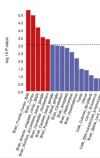
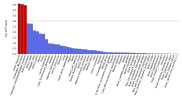
Our analyses revealed 283 genes, including some newly associated with migraine: MAML3, CELF4, IRX1, ASXL1, SPOCD1, CXCL , and TLR4 . In silico analyses showed enrichment in brain and uterine tissues, which may reflect broader hormonal or neuroendocrine pathways. Compared to previous migraine GWAS, our results show minimal vascular tissue enrichment, potentially reflecting the sample composition, which was predominantly men and Veterans.
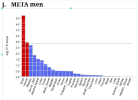
Migraine SNP-based heritability was 10% for men and 16% for women, and several sex-specific loci were identified through sex-stratified analyses. Despite high genetic correlations with neuropsychiatric disorders – including post-traumatic stress disorder, depression, and traumatic brain injury – Mendelian randomization analyses found no causal links.
Finally, we prioritized potential migraine drug targets, including losmapimod (which reduces production of toxic DUX4 protein) and TLR4 antagonists.
Web | DOI | PMC | PDF | Molecular Psychiatry | Open Access
Gasperi, Marianna; Rosenthal, Sara Brin; Maihofer, Adam X.; Gerstenberger, Armand; Dochtermann, Daniel; Choquet, Hélène; Pressman, Alice; Panizzon, Matthew S.; Stein, Murray B.; Schuster, Nathaniel M.; Pyarajan, Saiju; Afari, Niloofar; Nievergelt, Caroline M.
Abstract
Migraine is a neurovascular disorder that poses a high burden to Veterans, who face a greater risk than sex-matched individuals in the general population. Genetic research on migraine in Veterans and its link to psychiatric comorbidities is limited.
We present a meta-analysis of a genome-wide association study (GWAS) of migraine in a predominantly male sample of over 433,000 Veterans, including 87,859 cases, from the Million Veteran Program (MVP), identifying 49 genome-wide significant loci, with 36 novel to this study, of which 7 replicated in an independent prior GWAS (after Bonferroni correction for number of loci tested).
Our analyses revealed 283 genes, including some newly associated with migraine: MAML3, CELF4, IRX1, ASXL1, SPOCD1, CXCL , and TLR4 . In silico analyses showed enrichment in brain and uterine tissues, which may reflect broader hormonal or neuroendocrine pathways. Compared to previous migraine GWAS, our results show minimal vascular tissue enrichment, potentially reflecting the sample composition, which was predominantly men and Veterans.
Migraine SNP-based heritability was 10% for men and 16% for women, and several sex-specific loci were identified through sex-stratified analyses. Despite high genetic correlations with neuropsychiatric disorders – including post-traumatic stress disorder, depression, and traumatic brain injury – Mendelian randomization analyses found no causal links.
Finally, we prioritized potential migraine drug targets, including losmapimod (which reduces production of toxic DUX4 protein) and TLR4 antagonists.
Web | DOI | PMC | PDF | Molecular Psychiatry | Open Access