Murph
Senior Member (Voting Rights)
Well! its a delight to come back here and see the thing I offered as "a feint, an opening gambit, a prompt" be taken with such goodwill! A wonderful contrast to the reddit crowd.
Here's the summary as i see it:
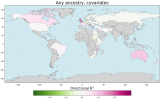
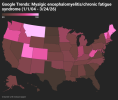
1. I looked at the map of google searches for me/cfs (strong in UK and Norway) and asked a question: what if there was signal on prevalence mixed in with signal on awareness. For a long time, I couldn't figure out any way to untangle the two.
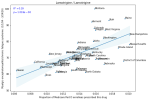
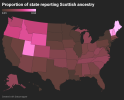
2. I wondered using variation in English heritage within the US could help answer the question. If the pattern in England and Norway was just awareness you'd have no obvious reason to find any correlation within the USA.
3. I found a clue that correlation was not zero within the USA the case of England. I emphasised this is not proof of anything, but it perhaps introduces a teeny tiny wobble to the null case of equal prevalence worldwide.
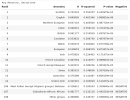
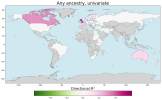
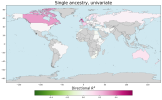
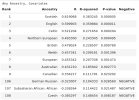
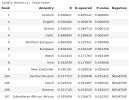
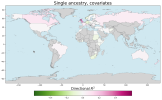
4. @forestglip took the ball and ran with it, further and far more rigorously than I had. Honestly, further and far more rigorously than I dared hope. Their work successfully reduced two of the kinds of uncertainty: there really does seem to be a correlation between English heritage and searches for the illness, and income or English-speaking is not the confounder.
5. Three types of uncertainty remain reasons why this is probably still nothing.
5.1 English, in the UK context, is a diluted category (Saxons, Normans, Celts). Let alone in the USA where English migration was some time ago!
5.2 Google trends data certainly doesn't only capture what it intends to capture, nor can we be sure it deals with foreign languages as well as it claims.
5.3 We have no certainty searches correlate with prevalence - although it obviously can, it's not prima facie ridiculous - and forestglip has done some work to prune off some of the most obvious other explanations.
6. So there *seems* to be a peculiar thing going on here, and one explanation *could* be that British/Celtic heritage correlates with MECFS. I'd say my confidence in the conclusion of Son et al has gone from maybe 55% before I did this analysis to maybe 50%.
Not a big shift, still lots of uncertainty. But in the research void we inhabit, getting even tiny probabilistic clues for free from existing public datatsets is worth something. As me/cfs science blog did with their immune work this week, emphasising what we don't know is important, and I don't think we know for sure that me/cfs hits all people equally.
Perhaps other clues will come forth and show all this to be a red herring. Perhaps other clues (HLA?) will suggest there's something going on.
Here's the summary as i see it:
1. I looked at the map of google searches for me/cfs (strong in UK and Norway) and asked a question: what if there was signal on prevalence mixed in with signal on awareness. For a long time, I couldn't figure out any way to untangle the two.
2. I wondered using variation in English heritage within the US could help answer the question. If the pattern in England and Norway was just awareness you'd have no obvious reason to find any correlation within the USA.
3. I found a clue that correlation was not zero within the USA the case of England. I emphasised this is not proof of anything, but it perhaps introduces a teeny tiny wobble to the null case of equal prevalence worldwide.
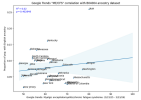
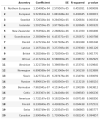
4. @forestglip took the ball and ran with it, further and far more rigorously than I had. Honestly, further and far more rigorously than I dared hope. Their work successfully reduced two of the kinds of uncertainty: there really does seem to be a correlation between English heritage and searches for the illness, and income or English-speaking is not the confounder.
5. Three types of uncertainty remain reasons why this is probably still nothing.
5.1 English, in the UK context, is a diluted category (Saxons, Normans, Celts). Let alone in the USA where English migration was some time ago!
First thought is, does 'English' really exist?
5.2 Google trends data certainly doesn't only capture what it intends to capture, nor can we be sure it deals with foreign languages as well as it claims.
Edit: Oh ha. Mississippi's searches for MS are extremely high because the state abbreviation for Mississippi is MS.
5.3 We have no certainty searches correlate with prevalence - although it obviously can, it's not prima facie ridiculous - and forestglip has done some work to prune off some of the most obvious other explanations.
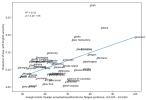
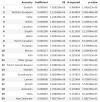
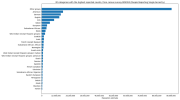
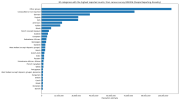
There isn't a very strong correlation between the ME/CFS search trends and speaking English at home:
6. So there *seems* to be a peculiar thing going on here, and one explanation *could* be that British/Celtic heritage correlates with MECFS. I'd say my confidence in the conclusion of Son et al has gone from maybe 55% before I did this analysis to maybe 50%.
"The total prevalence reported for Western and Asian populations were comparable."
Not a big shift, still lots of uncertainty. But in the research void we inhabit, getting even tiny probabilistic clues for free from existing public datatsets is worth something. As me/cfs science blog did with their immune work this week, emphasising what we don't know is important, and I don't think we know for sure that me/cfs hits all people equally.
Perhaps other clues will come forth and show all this to be a red herring. Perhaps other clues (HLA?) will suggest there's something going on.
Last edited: