A causal link between autoantibodies and neurological symptoms in long COVID, 2024, Santos Guedes de Sa, Iwasaki et al

Our lab ran all the arrays for the microarray elements and helped them some with the analysis. We have an agreement that a large set of the microarray data from this goes into the public domain (via Immport or similar) that I've been waiting a long time for and will do additional analysis on and share here when it becomes public. On HuProt the anti-MED20 effect in the paper is striking enough I've seen it in three other cohorts and even been able to identify a blinded study sent to me as a long-COVID study. However, this may not be an antigen in later pandemic or current long COVID and might just be a passenger cross-reactivity. I am also uncertain of it as the main mechanism - while prominently published - think home run they were trying to achieve I believe was either undone or unsuccessful - ie isolation and transfer of a single antigen-specific antibody that recapitulated the effects in mice. The serum transfer experiments seem great but ideally you want to link to some single mechanism vs 'all the antibodies in patient sera.' My general belief is that generic autoab dysregulation is less likely important than individual antigen-specific effects modifying metabolic / growth / immune proteins- note several cytokines, growth factors, surface proteins below where 'an autoab sticking in the wrong way could modify cell/body functions' -- tracing those sorts of threads is where I find this stuff most exciting.

1780010646874.png
 
Keyla just let me know the microarray data are all public! As well as Keyla's code (I have my own I'll point at it).


@ryanc97 if you want to start practicing for when the Fluge/Mella data gets released (pushing them to allow this) the above links are some of only existing public HuProt datasets (crazy there isn't more out there).
 
individual antigen-specific effects modifying metabolic / growth / immune proteins
Are these specific themes you have homed in on in this comment part of a specific a priori hypothesis (including specific gene products or pathways), or more generally part of effects elicited by autoab on potential cells/tissues of interest, or is this idea based on interpreting gene expression outcomes? (whether from here or elsewhere or altogether)

Almost all of the GSEA or individual DEG analysis I do on any of our lab's expression data across various tissues or biofluids or cultured cells from pwME/CFS or LC raises these broad themes, and literature almost always does as well. I am sure you would probably agree on this and it may be what has contributed to your thinking (if not please correct me).

I often wonder whether these recurring themes are indeed tied to some specific disease mechanism or are just an intuitive result of chance, because such a large proportion of the proteome encompasses these themes. If themes comprising like half of our proteins (I'm just throwing a random proportion out from my gut) tend to pop up every time and always in ways that do not clearly discriminate patients from controls can we be sure that it isn't noise?

I am not coming at this whole thing negatively or with an axe to grind, I haven't read the paper and as I say this applies to my own data so I am also being even handed and self critical in this, I've just been ruminating on this for a few years now and I think this is an important thing to think about that I have not seen or heard anybody mention. I wonder if anybody's done say plasma proteomics on well matched healthy populations and tested what themes emerge in whatever is found to be significantly different (whether by chance or subtle, varied confounders).

This is probably a tangent for this particular paper thread and might deserve a split if a discussion emerges, but the comment did make me remember this long held worry of mine
 
Last edited:
Are these specific themes you have homed in on in this comment part of a specific a priori hypothesis (including specific gene products or pathways), or more generally part of effects elicited by autoab on potential cells/tissues of interest, or is this idea based on interpreting gene expression outcomes? (whether from here or elsewhere or altogether)
I think this is a spectacular comment! All high-throughput data is inherently noisy. Autoantibody data is super weird as there is no 'housekeeping' or 'background expression' or 'normal levels' to speak of - such topics are somewhat nonsense as well as the assumption mRNA / protein ontologies are entirely relevant. Humans don't have autoabs to most human proteins. The ones they do have? Highly private and individualized. But also shockingly common - more than you would expect - and pervasive across the population. How to make sense of such things?

Some people do GSEA/ontology enrichment for pathways (and this can happen I guess if you've got continuous autoimmune attack vs an organ). But i can also just be features of dumping a ton of proteins from that organ or cell type into circulation as an artifact. Autoab data is inherently cross-contaminated by proteomic signatures nobody yet has ways to subtract; ie you're usually loading whole serum/plasma - staining an array or phage or ELISA - coming back with a detection reagent. But a lot more is in that sample available to interact with your bait in between the that and the IgG, etc you stain or IP for. IE you can get tertiary interactions. A protein can interact with a protein and the antibody can be to that; or an antibody can be in a complement complex - binding a protein - and that protein can interact. I sort of wonder if a lot of noise / GSEA signatures come from that angle. I think this type of event probably confounds the data and literature. Also almost nobody untangles the isotypes at scale. All the detection libraries are different. It's not like genetics/mRNA where 'the thing is the thing' - its really hard to make the detection reagents and everyone does it differently and the results are often not 1:1 cross comparable.

And alas I have still not really addressed your question. I'm mostly just saying that I agree the data are complex - I expect most signatures that are real and reproducible are 'noise' to some degree. But I also think real value is there to be found. How to find it?

I tend to try and avoid said enrichments and noise above (as I tend to assume 'generic organ-specific abs' to be indicative of something else like a pathogenic T cell autoantigen or something) and think about 'specific drug-like things' autoabs do that can catastrophically alter bodily processes. This simplification is supported by innumerable literature anecdotes - and I tend to just extrapolate this to the rest of the proteome. IMHO anything a monoclonal autoab or biologic can do? It likely naturally exists and occurs at some rate across the human population and we are essentially ignorant today of these effects. Autoabs are also private and stable so once you 'acquire them' they are essentially forever at least in the type of data I look at - ie they 'fit' the pattern of presentation for diseases like ME/CFS.

Favorite few literal examples with much clearer mechanisms than the one in the above paper; I'm not convinced Keyla/Iwasaki found the culprit in their case though there are many strong associations / co-correlates.

Anti-CD320 autoabs cause neurologic issues. I see this event above background in 30% (!!!?!) of samples I run. I have heard from the UCSF team that found this that after screening 100,000+ samples they see it with expected pathogenic intensity in 5% of the American population (age associated - older you get more you have). Can't get B12 into cells:

Anti-type-1 IFN autoabs are part of why viruses become dangerous with age. ~4% of people over 70 have them in a way that is pathogenic:

This is very established in infectious disease for cytokines. It's like being a genetic knockout - great lecture by Steve Holland here:


People have known since 1980s that critical metabolic hormone VIP is (catalytically degraded by catalytic autoabs??!) in some fraction of people:

Those are a few tiny examples - I just then extrapolate that to 'every surface protein and molecule' and holy s&%$ nobody is studying this efficiently. Maybe I'm crazy and it's not such a big deal - but I've seen enough of these 'anecdotes' to assume they are far more than that!

And while a bit out there have gotten folks to buy into this; have done projects or collaborated with folks doing most above work. Going to go try to find out if drug-like autoabs cause cancer the next few years (I think they will be found to) - and spending most of my last week trying to choose proteins to add to our libraries for this (kicked off and am a co-PI myself on this):
 
I think this is a spectacular comment! All high-throughput data is inherently noisy. Autoantibody data is super weird as there is no 'housekeeping' or 'background expression' or 'normal levels' to speak of - such topics are somewhat nonsense as well as the assumption mRNA / protein ontologies are entirely relevant. Humans don't have autoabs to most human proteins. The ones they do have? Highly private and individualized. But also shockingly common - more than you would expect - and pervasive across the population. How to make sense of such things?

Some people do GSEA/ontology enrichment for pathways (and this can happen I guess if you've got continuous autoimmune attack vs an organ). But i can also just be features of dumping a ton of proteins from that organ or cell type into circulation as an artifact. Autoab data is inherently cross-contaminated by proteomic signatures nobody yet has ways to subtract; ie you're usually loading whole serum/plasma - staining an array or phage or ELISA - coming back with a detection reagent. But a lot more is in that sample available to interact with your bait in between the that and the IgG, etc you stain or IP for. IE you can get tertiary interactions. A protein can interact with a protein and the antibody can be to that; or an antibody can be in a complement complex - binding a protein - and that protein can interact. I sort of wonder if a lot of noise / GSEA signatures come from that angle. I think this type of event probably confounds the data and literature. Also almost nobody untangles the isotypes at scale. All the detection libraries are different. It's not like genetics/mRNA where 'the thing is the thing' - its really hard to make the detection reagents and everyone does it differently and the results are often not 1:1 cross comparable.

And alas I have still not really addressed your question. I'm mostly just saying that I agree the data are complex - I expect most signatures that are real and reproducible are 'noise' to some degree. But I also think real value is there to be found. How to find it?

I tend to try and avoid said enrichments and noise above (as I tend to assume 'generic organ-specific abs' to be indicative of something else like a pathogenic T cell autoantigen or something) and think about 'specific drug-like things' autoabs do that can catastrophically alter bodily processes. This simplification is supported by innumerable literature anecdotes - and I tend to just extrapolate this to the rest of the proteome. IMHO anything a monoclonal autoab or biologic can do? It likely naturally exists and occurs at some rate across the human population and we are essentially ignorant today of these effects. Autoabs are also private and stable so once you 'acquire them' they are essentially forever at least in the type of data I look at - ie they 'fit' the pattern of presentation for diseases like ME/CFS.

Favorite few literal examples with much clearer mechanisms than the one in the above paper; I'm not convinced Keyla/Iwasaki found the culprit in their case though there are many strong associations / co-correlates.

Anti-CD320 autoabs cause neurologic issues. I see this event above background in 30% (!!!?!) of samples I run. I have heard from the UCSF team that found this that after screening 100,000+ samples they see it with expected pathogenic intensity in 5% of the American population (age associated - older you get more you have). Can't get B12 into cells:

Anti-type-1 IFN autoabs are part of why viruses become dangerous with age. ~4% of people over 70 have them in a way that is pathogenic:

This is very established in infectious disease for cytokines. It's like being a genetic knockout - great lecture by Steve Holland here:


People have known since 1980s that critical metabolic hormone VIP is (catalytically degraded by catalytic autoabs??!) in some fraction of people:

Those are a few tiny examples - I just then extrapolate that to 'every surface protein and molecule' and holy s&%$ nobody is studying this efficiently. Maybe I'm crazy and it's not such a big deal - but I've seen enough of these 'anecdotes' to assume they are far more than that!

And while a bit out there have gotten folks to buy into this; have done projects or collaborated with folks doing most above work. Going to go try to find out if drug-like autoabs cause cancer the next few years (I think they will be found to) - and spending most of my last week trying to choose proteins to add to our libraries for this (kicked off and am a co-PI myself on this):

Thank you for the very thorough reply
 
Thank you for the very interesting discussion and links. The video was good - there is a little bit of discussion about Long Covid in the questions at the end.

Autoab data is inherently cross-contaminated by proteomic signatures nobody yet has ways to subtract; ie you're usually loading whole serum/plasma - staining an array or phage or ELISA - coming back with a detection reagent.
How does the approach of mass spectroscopy stack up as a way to identify autoantibodies?

Anti-type-1 IFN autoabs are part of why viruses become dangerous with age. ~4% of people over 70 have them in a way that is pathogenic:
From the linked article:
We also show, in a sample of 34,159 uninfected subjects from the general population, that auto-Abs neutralizing high concentrations of IFN-α and/or -ω are present in 0.18% of individuals between 18 and 69 years, 1.1% between 70 and 79 years, and 3.4% >80 years. Moreover, the proportion of subjects carrying auto-Abs neutralizing lower concentrations is greater in a subsample of 10,778 uninfected individuals: 1% of individuals <70 years, 2.3% between 70 and 80 years, and 6.3% >80 years. By contrast, auto-Abs neutralizing IFN-β do not become more frequent with age. Auto-Abs neutralizing type I IFNs predate SARS-CoV-2 infection and sharply increase in prevalence after the age of 70 years. They account for about 20% of both critical COVID-19 cases in the over-80s, and total fatal COVID-19 cases.
I think it's interesting to think about auto-antibodies as things that might accumulate over a life-time (perhaps as a consequence of infections, perhaps due to exposures to other stressors). I do think that it is likely that the incidence of ME/CFS onset continues on into old age - perhaps by th time people get into their nineties, most people actually have ME/CFS.

Autoabs are also private and stable so once you 'acquire them' they are essentially forever at least in the type of data I look at - ie they 'fit' the pattern of presentation for diseases like ME/CFS.
I wonder about that. We have talked elsewhere how the pattern of symptoms in ME/CFS can shift over time. People might have gastrointestinal symptoms in the first years, but a decade on, those symptoms don't feature in their illness. Does it seem most likely, if autoimmunity was causing ME/CFS, that there are a range of different autoantibodies causing the range of symptoms, some of which perhaps drop out or coming in over time? Or could it be one sort of autoantibody causing all sorts of symptoms depending on where in the body it is acting?

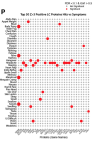
I notice in that chart that you posted Tyler that there were no hits on fatigue and it doesn't look as though PEM. or anything like it was asked about. The LC symptoms that did get hits, taken together, don't actually look much like ME/CFS-type LC.
 
I am not in a good place to have a detailed look at this. However, I note comments from Hutan, Tyler Hulett and DMissa that look well placed. In my experience claims like this almost never pan out to established science. There is a lack of antigen specificity and quantitation of immunostaining is always fraught with problems. An increase in antibody 'noise' after a major infection is not particularly surprising.
 

News Release 28-May-2026

Mount Sinai scientists validate a link between autoimmunity in a subset of people with long COVID​

Peer-Reviewed Publication
The Mount Sinai Hospital / Mount Sinai School of Medicine


FacebookXLinkedInWeChatBlueskyMessageWhatsAppEmail

A Mount Sinai-led research team has demonstrated that autoimmunity, where the body’s immune system attacks its own tissues, is responsible for the often-debilitating and confounding symptoms of long COVID in a subset of people.

Findings from the study, published in Cell on May 28, could lead to important new approaches to treating patients with long COVID, including already-validated therapies for management of autoimmunity as well as new ways of clinically identifying which patients are most likely to benefit from these therapies.

“We’ve known for some time that long COVID involves not just one but a variety of phenotypes, and now we have validated that autoimmunity is a major contributor to the symptom burden,” says David Putrino, PhD, Nash Family Director of the Cohen Center for Recovery From Complex Chronic Illness at Mount Sinai and co-senior author of the study. “This new awareness of the physiology of long COVID will enable us to identify a number of effective treatments for autoimmunity that could significantly improve the symptoms of millions of people with this chronic condition.”

Studies have shown that between 4 and 20 percent of people infected with COVID-19 continue to experience symptoms such as persistent fatigue, cognitive impairment, heart palpitations, and joint and muscle pain for months or even years. Mechanisms behind this prolonged form of the disease are believed to include viral persistence, reactivation of previously latent viruses such as herpesviruses, and immune dysregulation, where the immune system struggles to reset after the infection has cleared, leading to ongoing inflammation and other health issues.

In this new study, researchers sought to better understand the different subtypes of long COVID and the involvement of the immune system in triggering long-term physical symptoms. To that end, researchers collected and purified antibodies from the blood of 87 participants with long COVID and infused them into healthy mice. The results were striking.

Moreover, that awareness could inform which therapies are most likely to reduce the symptom burden. Intravenous immunoglobulin (IVIG), for example, contains antibodies from healthy human donors that are commonly used to treat autoimmune disorders like lupus by strengthening or regulating the recipient’s immune system. FcRn inhibitors are other biologic agents that could help long COVID patients by lowering the amount of antibodies. IVIG and FcRn inhibitors are already being prescribed for some patients with long COVID, though the outcomes have been inconsistent, with some patients responding exceedingly well while others do not. That, in turn, has served to dampen enthusiasm within the industry for long COVID research.

Also on the radar screen of scientists as they investigate new and repurposed therapies for long COVID, according to Dr. Putrino, are CAR-T cell therapy, with the potential to genetically modify a person’s T cells to recognize and target harmful cells secreting autoantibodies, and plasmapheresis, which could simply remove those autoantibodies from the system.

“Before we had no way of predicting who would benefit from therapies like IVIG or FcRn inhibitors,” he says. “Our study now shows that if you are in a subgroup of long COVID patients who have autoantibodies circulating in your body, this is a quantifiable sign that you may be a good candidate for these drugs.”

In addition to its clinical significance, Dr. Putrino believes his study carries an urgent public health warning around the donation of blood and blood products like plasma. He explains: “In the U.K., having long COVID is an exclusion for donating blood, while in the United States these individuals are still allowed to donate. Given the dangers that plasma from people with long COVID can pose for others, this country should be considering fundamental changes to its donation policies that reflect that health threat and are designed to fully protect the public.”


About the Mount Sinai Health System

The Mount Sinai Health System is New York City's largest academic medical system, encompassing eight hospitals, a leading medical school, and a vast network of ambulatory practices throughout the greater New York region. Mount Sinai is a national and international source of unrivaled education, translational research and discovery, and collaborative clinical leadership ensuring that we deliver the highest quality care—from prevention to treatment of the most serious and complex human diseases. The Health System includes more than 7,200 physicians and features a robust and continually expanding network of multispecialty services, including more than 400 ambulatory practice locations throughout the five boroughs of New York City, Westchester, and Long Island. The Mount Sinai Hospital is ranked No. 14 on U.S. News & World Report's "Honor Roll" of the Top 20 Best Hospitals in the country and the Icahn School of Medicine as one of the Top 20 Best Medical Schools in country. Mount Sinai Health System hospitals are consistently ranked regionally by specialty and our physicians in the top 1% of all physicians nationally by U.S. News & World Report.


For more information, visit https://www.mountsinai.org or find Mount Sinai on Facebook, Twitter and YouTube.


Journal​

Cell

Method of Research​

Randomized controlled/clinical trial

Subject of Research​

Animals

Article Title​

A causal link between autoantibodies and neurological symptoms in long COVID

Article Publication Date​

28-May-2026
 
A big question though is - are there differences between healthy controls and Long Covid people in the amount or type and, crucially, functionality of AABs?

And, if AABs were the problem, then I think we'd know that IVIG cures us? I don't think we know that.
IVIG dilutes the problem doesn't mean it fixes it; a high-titer functional autoab might remain in enough abundance to still cause symptoms after IVIG or even anti-CD38+. The dara data looks promising but it doesn't reset *all* the autoantibodies.

How does the approach of mass spectroscopy stack up as a way to identify autoantibodies?
Mass spec is a good technique but has its own issues. You can only identify things you immunoprecipitated (IE the culprit target must be used as bait to be captured by the antibodies or you'll miss it). It is also biased for the most abundant proteins in the bait set. IE you grow up and lyse cells to use for IgG capture than mass spec - you are now only getting to look for abs to that cell (most cells have fewer than 10,000 proteins, less than half of proteome, identifiable at depth. Many thousands of those at lower than 500 copies - ie rare), and if the protein isn't there you will miss it. Why I like the synthetic methods where you try to grow up high-copy all proteins one way to remove this bias (but this introduces different issues, like being grown in yeast). Tissue mass spec is probably best for autoabs if you have a piece of the organ you expect is involved where abs accumulate (ie do IP on a kidney chunk from nephritis patient) - but you need to cut the tissue out of the patient to do that (nobody here will be donating a chunk of their brain for ME/CFS autoab mass spec IP)!

On this: "I notice in that chart that you posted Tyler that there were no hits on fatigue and it doesn't look as though PEM. or anything like it was asked about. The LC symptoms that did get hits, taken together, don't actually look much like ME/CFS-type LC."

--> I don't see the anti-MED20 autoab in the Fluge/Mella CD38+ ME/CFS cohort and it's by far the most distinct outlier in the Sa/Iwasaki paper and they validated it several ways and did some functional assays; transfer of IgG isolate containing it and other things induces symptoms in mice. I think it's their best candidate in the set but they didn't entirely prove mechanism with it from what I can tell.
 
Made this summary of the paper.

1) Impressive paper from Iwasaki’s lab pointing at autoimmunity in a subgroup of Long Covid patients. They replicated previous experiments of antibody transfer causing symptoms in mice.

A couple of findings that stand out…

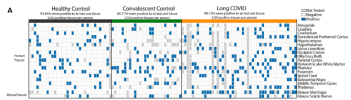
2) They extracted antibodies from blood and found that those from LC patients more often reacted to brain tissue such as the thalamus or locus coeruleus. However, after accounting for sex and age only the results for mouse meninges were significant.
1780069484282.png

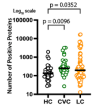
3) Next, they searched for the targets of the antibodies using the HuProt™ microarray which includes over 21.000 different human proteins. Unfortunately, there wasn’t a clear difference in positive response to proteins between LC and convalescent controls.
1780069491821.png

4) The CellTrend ELISA assay was used for more targeting testing. LC patients had more antibodies against GPCR such as adrenergic receptors and against ionotropic receptors such as NMDAR2C, a subunit of a glutamate receptor.

5) I had a look at antibodies against the β2/M3/M4 receptors that previously were found to be increased in ME/CFS (Loebel et al. 2016). Supplementary figure S6 shows that LC patients often had the highest levels, but the overall differences were not significant.
1780069498397.png

6) The authors note that a small subset of LC patients had increased antibodies levels against common autoantigens (similar to lupus patients) but most fell below the positivity threshold. The proportion of ANA-positives did not differ significantly per group.

7) To study took the HuProt proteins that bounded with LC antibodies and looked at the biological pathways they are involved in. There was a lot of heterogeneity but hormone signaling, cell adhesion, synaptic function, neurogenesis came up.

8) One of the top hits were antibodies against the Mediator Complex Subunit 20 (MED20) which is involved in turning genes on and off. The paper lists findings suggesting these antibodies are pathologic such as reduced IgM/IgG ratio, complement deposition, etc.

9) The authors included an independent cohort with 32 LC patients, but it looks like they used a different measurement for it: a microarray with 118 autoantigens. Here, LC patients had increased antibodies against several complement components.

10) The strongest results in the paper are the transfer of antibodies to mice who then developed symptoms such as pain sensitivity. Similar findings have been reported by the groups of Jeroen Den Dunnen, Charles Nicaise and Andreas Goebel.

11) They transferred antibodies from 31 LC patients, 26 healthy controls and 30 convalescent controls. Mice were all female and each received IgG from a different donor.

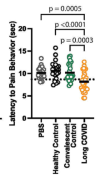
12) On the hot plate test, the mice that received LC antibodies were faster to withdraw their paws indicating increased pain sensitivity (Figure 6C).
1780069507945.png

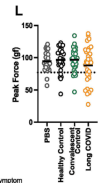
13) On the grip strength test there a trend towards muscle weakness in the mice with LC antibodies but the difference was not significant (Figure 6L).
1780069512773.png

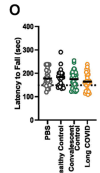
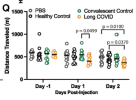
14) The rotarod test, which measures balances and coordination, showed no significant differences in latency to fall but on a treadmill test the mice getting LC antibodies travelled less.
1780069518066.png1780069524425.png

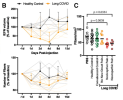
15) Lastly there were the open field and elevated zero maze tests which measure anxiety-like behavior and locomotion, but these showed no significant difference.

It’s not clear to me if the authors applied a correction for multiple comparisons across these different tests.

16) Another interesting finding: mice that got LC antibodies had a reduction in intraepidermal nerve fiber (IENF) in the dorsal root ganglion, a marker for small fiber neuropathy.

1780069554282.png

17) They also measured brain-wide neuronal activity and report activation of brain regions associated with pain and fatigue, although this is a bit more speculative (hard to interpret what brain regions and signaling means).

18) Overall, this is an impressive in-depth paper providing evidence for autoimmunity in a subset of LC patients.

But a decisive result of identifying a specific antibody that is pathological and causes symptoms, wasn’t achieved (yet).
 
Curious what the explanation might be that antibodies from LC are more likely to cause pain sensitivity in mice compared to antibodies from convalescent controls. Several groups have reported this now.

Looks like this group did in-depth measurements to figure out what causes this but that they didn't fully manage to figure it out.
 
My question is, might we expect to see this with other non-autoimmune conditions? Maybe just being inactive or unhealthy leads to a general slight impairment in the self-tolerance mechanisms of the body, where slightly more auto-antibodies of all sorts get produced.
 
Back
Top Bottom