

ahimsa
Senior Member (Voting Rights)
[Please move this post if it's in the wrong place - the news release mentions Long Covid but not ME/CFS]
"When the nervous system starves the brain: Autonomic dysfunction unmasked as a hidden driver of treatment-resistant depression"
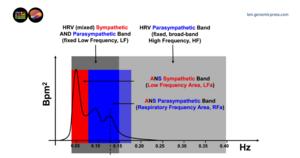
Here's the section mentioning Long Covid. To me it seems a bit overly positive, i.e., "just be patient, you can rebalance things and recover in 15 - 24 months."
I can't tell if this makes any sense or is the recovery idea is all wishful thinking because some percentage of people recover on their own.
Link to paper:

"When the nervous system starves the brain: Autonomic dysfunction unmasked as a hidden driver of treatment-resistant depression"
When the nervous system starves the brain: Autonomic dysfunction unmasked as a hidden driver of treatment-resistant depression
For more than two thousand patients who had cycled through years of antidepressant regimens without relief, the problem was never solely in their heads. A new study published in Brain Medicine tracked 2,197 individuals across six years and found that specific dysfunctions of the parasympathetic...
www.eurekalert.org
A peer-reviewed study in Brain Medicine reveals that parasympathetic and sympathetic imbalances, long overlooked in psychiatric practice, may account for depressive symptoms in patients who never responded to conventional antidepressants, with 95 percent
Here's the section mentioning Long Covid. To me it seems a bit overly positive, i.e., "just be patient, you can rebalance things and recover in 15 - 24 months."
The Long COVID Shadow and the Patience Problem
Nearly half of the study cohort (48.3 percent) had been diagnosed with long- or post-COVID syndrome, a population now recognized as a vast and troubled reservoir of autonomic dysfunction. Other prominent conditions included orthostatic dysfunction (36.9 percent), hypertension (39.6 percent), and type 2 diabetes (16.9 percent). In many of these patients, the elevated blood pressure that had been medicated as a standalone cardiac problem was, in fact, compensatory, the heart working overtime to push blood past autonomic resistance and up to the brain. Treat the blood pressure without addressing the underlying imbalance, and you lower the number on the cuff while the brain goes hungrier still.
Recovery demands a kind of patience that modern medicine rarely rewards. Full rebalancing of the parasympathetic and sympathetic systems requires 15 to 24 months, and the process is fragile, easily set back by stress or illness. Only 9.6 percent of patients abandoned the program, however. The authors attribute this persistence, at least partly, to the early improvement in sleep quality and to the simple, radical act of telling patients that they were believed.
"We compare the process to breaking a bad habit and establishing a good one. You cannot rush nerve retraining any more than you can rush a fracture. But when patients understand the physiology behind their suffering, when they see that their fatigue and fog have a measurable, mechanical cause, something shifts. They find hope. And hope is what keeps a person in treatment long enough for the nervous system to heal," added Dr. Colombo. Autonomic expert, Adjunct Professor of Internal Medicine, Rowan-Virtua School of Osteopathic Medicine.
I can't tell if this makes any sense or is the recovery idea is all wishful thinking because some percentage of people recover on their own.
Link to paper:
Genomic Press
Is it really treatment-resistant depression? Parasympathetic and sympathetic dysfunction as a treatable contributor to depressive symptoms
genomicpress.kglmeridian.com