What does deconditioning look like? - ME/CFS Skeptic blog

That somehow results (perhaps by social contagion) in the person developing a faulty interpretation or amplification of common body sensations.

This seems to be the essence of the typical Reddit-level doctor understanding of ME/CFS and similar conditions. Some BPS researchers would go a step further and try to postulate internal mechanisms like central sensitisation that allegedly explain why normal bodily sensations are being amplified in our brains to make us think we're ill when in fact there's nothing wrong.
 
Only 15% (11/75) reported that they had believed that their condition was related to physical deconditioning at baseline whereas 81% (61/75) believed this after treatment

I have real trouble believing the researchers actually believe this is a practical meaningful result.

Frankly, all it proves is that gaslighting and bullying by authority figures works. Which is neither new nor helpful knowledge.
It only proves that people will repeat something from a bullying authority, it means nothing about believing it. We know from decades of very intense efforts that brainwashing doesn't work in most cases. People rarely actually believe the things they were bullied into thinking, they usually merely act them out only as needed by an enforcement mechanism, usually involving punishment, ostracization or some combination thereof. Here simply to end the whole process, like a child who keeps bugging you non-stop to say something and you eventually just relent to make it stop.

Some people changed answers on a questionnaire following focused efforts at changing those specific answers. It means nothing at all about them believing it at all. What we do have, though, is people who are satisfied that it looks the same, and report it as such. Even though in a context that is identical except for one difference they would scoff at the notion. It's because of their expectations. They don't expect a homeopathic drink to elicit the same change, so they would dismiss as "merely self-reported" if everything else was the same except swapping say, CBT, for homeopathy.

The change in belief is there, but it's not in the patient's, it's in the setup that explicitly accepts a complete BS answer as valid because they prefer this answer over the truth. It's a perfect equivalent of confessions under duress. It ends the ordeal. If the captor is fine with a lie, if merely to send a message that their truth is absolute, that is a choice. Professionals should not ever be content with a lie, but as was said about Watergate: the truth is, these are not very bright guys, and things got out of hand.
 
The symptoms aren't real.
Oh i think they mostly believe that we are having a real experience, so if we say we're in pain/fatigue its because we are feeling pain/fatigue, but its an internal experience & not caused by any kind of illness or damage - a bit like phantom limb pain. Hence them not wanting to 'medicalise' it with aids & adaptations (or tube/TPN feeding!)

I think the idea put about most often is that an infectious illness and the resulting (often slight) deconditioning (relative to the person's previous fitness) and post-convalescence fatigue are triggers, causing an increased number of aches and pains and other negative sensations as the person attempts to resume normal life. That somehow results (perhaps by social contagion) in the person developing a faulty interpretation or amplification of common body sensations. With that model, deconditioning doesn't necessarily cause ongoing ME/CFS symptoms and GET can be seen more as a means to overcoming the false illness belief and fears of resuming normal life and activity levels than increasing fitness.

Under that BPS model, every normal ache and pain is supposedly interpreted as evidence of a serious illness. The dizziness that everyone can get when standing up too quickly (especially during an infection) is interpreted as an orthostatic intolerance syndrome. And then, we settle into the sick role and develop bad habits. The BPS interventions supposedly provide us a way to get back to health without losing face.
Yes this is what i understand it to be meaning when they talk about BPS

Some BPS researchers would go a step further and try to postulate internal mechanisms like central sensitisation that allegedly explain why normal bodily sensations are being amplified in our brains to make us think we're ill when in fact there's nothing wrong.
yes this too - which then causes what they see as unhealthy adaptive behaviour which perpetuates symptoms
 
Its the misinterpretation of normal sensations that gets me the most tbh... i mean sure everyone feels exhausted & aching after they do more than they're used to,
but do they become cognitively impaired so confused they nearly burn the house down while attempting to cook or so forgetful they dont reaslise they left the bath running & the ceiling falls in... are they unable to find their way home? are they vomiting with the exertion of crawling to the bathroom while yesterday they could walk 15metres? are they losing accurate proprioception & coordination so they bump into things and miss their mouth with the fork? not to mention feeling like they are hanging upside down when they are lying flat?

And, from my own POV, do they feel ILL, not tired, ILL?

It absurd if you actually spend any time with anyone who is severe end of moderate - severe!
 
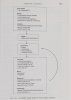
I do think there was a difference in emphasis (and, I think, a difference in understanding) between SW & MS (who emphasised the supposed psychogenic aspects more) and White (who placed greater emphasis on the supposed value of exercise). Nonetheless, even if we look at the CBT literature - here's Sharpe's "complex specific model of chronic fatigue syndrome" (from the book Science and Practice of Cognitive Behavioural Therapy, p395). The only known physiological variables that he places in his model are the "effects of inactivity and emotional distress":
In the wider orthodox view, outside of the narrow group of psychosomaticians that we're all familiar with, deconditioning is also thought to be central: for instance, Viner & Christie (BMJ, 2005, link) write that:
CFS is likely to be a collection of different conditions and that several biopsychosocial “causal pathways” can lead to chronic fatigue. It is therefore best understood as a chronic low functioning state in which biological causal factors have resolved yet the illness remains because of physical deconditioning, sleep disturbance, and psychosocial factors.
The explanation is also thought to apply to children; this is from the American paediatrics textbook Pediatrics:
Prolonged bedrest and marked physical inactivity actually promote further deconditioning and persistence of CFS.
Certainly if deconditioning was proved beyond doubt not to be a relevant factor then that would undermine the model.
 
I think the idea put about most often is that an infectious illness and the resulting (often slight) deconditioning (relative to the person's previous fitness) and post-convalescence fatigue are triggers, causing an increased number of aches and pains and other negative sensations as the person attempts to resume normal life. That somehow results (perhaps by social contagion) in the person developing a faulty interpretation or amplification of common body sensations. With that model, deconditioning doesn't necessarily cause ongoing ME/CFS symptoms and GET can be seen more as a means to overcoming the false illness belief and fears of resuming normal life and activity levels than increasing fitness.

This is the general explanation, although the idea is that the deconditioning effects get worse because of the "vicious downward spiral" that is often invoked. The worsening symptoms after exertion confirm the further need to rest, that rest causes more deconditioning hence even more symptoms--dizziness, cognitive disorientation, sleep disorders, more muscle weakness, etc--and more false beliefs in the illness.
 
The Anomalies paper published in 2023 by White et al, and clearly led by White who was the leader on GET in PACE, tries to argue against NICE's removal of GET.
Thanks for pointing that out.

And some BPS people probably say different things on different days to different audiences and may not, even in the privacy of their own minds, have a stable and fixed idea about what they are arguing.
:)

I don't think that that quote proves that senior BPS people necessarily believed that physical deconditioning was the cause of debilitating symptoms.
It's what they explicitly state and published in the main biggest GET papers is the basis for GET (and the graded exercise approach of FINE). As you say, who knows what they believe. And those statements are a problem for any future attempts to justify GET, given the evidence on deconditioning summarised so well in this blog.

With that model, deconditioning doesn't necessarily cause ongoing ME/CFS symptoms and GET can be seen more as a means to overcoming the false illness belief and fears of resuming normal life and activity levels than increasing fitness.
Particularly if we do get a published paper on deconditioning, this

This is from Bob's excellent letter (PDF) in response to the Pace mediation paper:
>
“fitness measures do not appear to mediate the effects of either treatment”.Chalder and colleagues acknowledge that the trial outcomes do not support the hypothetical deconditioning model of GET for chronic fatigue syndrome.3
<

That deconditioning is irrelevant doesn't impact the model for CBT, so BPS can sail on with that.
 
Curiously, I haven't heard any Pace authors talk about GET for some time, it's all CBT now. But BPS includes (or included) both GET and CBT.
The Anomalies paper was published less than a year ago and it uses GET, and all three PACE PIs are authors on that paper.
I do think we can and should argue that many people with ME/CFS are not extremely deconditioned,
Or even deconditioned at all. There is simply no evidence that it is a primary feature of ME/CFS.
...and that the idea that ME/CFS is just a lack of fitness is ridiculous. I just don't think that it is enough to head off BPS ideas.
Not on its own, certainly. But it has long been a core assumption in their model, and removing it seriously weakens that model.
This is the general explanation, although the idea is that the deconditioning effects get worse because of the "vicious downward spiral" that is often invoked. The worsening symptoms after exertion confirm the further need to rest, that rest causes more deconditioning hence even more symptoms--dizziness, cognitive disorientation, sleep disorders, more muscle weakness, etc--and more false beliefs in the illness.
That is my understanding. Deconditioning is a critical part of their putative pyschosomatic feedback loop.
 
Last edited:
Its the misinterpretation of normal sensations that gets me the most tbh... i mean sure everyone feels exhausted & aching after they do more than they're used to,
but do they become cognitively impaired so confused they nearly burn the house down while attempting to cook or so forgetful they dont reaslise they left the bath running & the ceiling falls in... are they unable to find their way home? are they vomiting with the exertion of crawling to the bathroom while yesterday they could walk 15metres? are they losing accurate proprioception & coordination so they bump into things and miss their mouth with the fork? not to mention feeling like they are hanging upside down when they are lying flat?

And, from my own POV, do they feel ILL, not tired, ILL?

It absurd if you actually spend any time with anyone who is severe end of moderate - severe!
Just a couple weeks ago I spent the whole day running errands. My last stop was at the grocery store. I was so tired I started putting stuff in my bags without scanning them, at the self-checkout. When I realized what I was doing, I dumped all the bagged groceries back into my cart and went to the regular checkout.
 
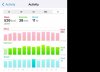
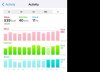
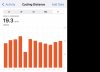
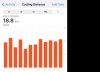
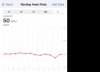
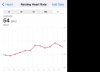
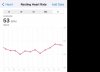
Time to again falsify the requirement for deconditioning (n=1). For reference I suspect I caught asymptomatic Covid around Aug/Sep 2020. In hindsight I was probably developing ME late Nov, early Dec 2020 and had my first crash in Jan 2021. That took about 10 days to recover but things weren't right and I initially had a period of symptom-cycling: 3 weeks on, 3 weeks off. Symptoms were principally POTS and mild myalgia (lactic acid burn feeling).

While I thought I had POTS and was diagnosed with it, I wasn't sure if it was ME, but periods of fatigue worsened. Unfortunately I didn't know enough to put everything together, so carried on with exercise. I crapped out rapidly to severe over days in June 2021 and then joined S4ME and started learning.

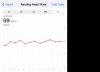
Wearables (in this case Apple Watch/iPhone) captured this. Point being that you can see I was still "fully" active before I became immobilised and incapacitated. The problem the BPS crew have with their idea that we are misjudging normal bodily sensations is that the experience of both is only available to patients. We know what it's like to live with a normal experience first. They have no idea what it's like to live with the abnormal experience. Again, BPS, please explain the ex-Olympic athletes with this.

IMG_9948 Medium.jpeg IMG_9949 Medium.jpeg IMG_9950 Medium.jpeg IMG_9951 Medium.jpegIMG_9952 Medium.jpeg IMG_9953 Medium.jpeg

IMG_9954 Medium.jpeg IMG_9955 Medium.jpeg IMG_9956 Medium.jpeg
 
Last edited:
Regarding the longitudinal studies, I seem to have missed this one by the research team of Crawley.
Physical activity at age 11 years and chronic disabling fatigue at ages 13 and 16 years in a UK birth cohort - PubMed (nih.gov)

It does not use the term ME/CFS but 'chronic disabling fatigue' . Less activity measured with an accelerometer at age 11 was associated with fatigue at age 13 but not at age 16. The authors say that reverse causality cannot be excluded because the children with fatigue at age 13 might have already been ill at age 11. There is also a problem that fatigue was assed by the mothers at age 13.
 
There was also this EBV-study by the research team of Katz in Chicago. They measured activity using a questionnaire before, during and multiple times after EBV-infection in participants who developed CFS and those who didn't.
Post-Infectious Fatigue in Adolescents: The Role of Physical Activity - PMC (nih.gov)

The authors report:
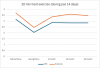
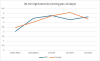
The two groups did not differ significantly in terms of physical activity levels before, during, and after infection [...] Adolescents with chronic fatigue syndrome appear to be pushing themselves in an attempt to maintain similar activity levels as their peers, but paying for it in terms of fatigue severity and an increased need for sleep, particularly during the day.

I made graphs out of their mean values to more easily show the difference over time:

upload_2024-8-21_14-23-31.png

upload_2024-8-21_14-23-43.png
 
I didn't know where to put these - mods please move if there is a better place

The following has popped up from one of my local hospital trusts

which includes the eye-catching claim:

  • If you are over 80, 10 days of bed rest equals 10 years of muscle aging
with the following under the drop-down 'what is deconditioning?' once clicking through

Deconditioning is a decline in function and for older people with frailty, this may start within hours of their lying on a trolley or bed.

Up to 65 per cent of older patients experience decline in function during hospitalisation. Many of these patients could prematurely end up in a care home because of ‘deconditioning’ and the loss of functional abilities while in hospital.

These seem like exaggerated claims. Are they evidenced properly anywhere or has the whole thing got rather out of hand where they can infer anything relating to 'old people who can't get home' being assumed to be 'because they didn't move enough' rather than potentially them struggling before and then of course they went into hospital for a reason and perhaps also got somewhat a not comfortable environment, stiffen up a bit if not in their usual chair and routine - which isn't quite the same as your muscles 'aging 10yrs in 10 days' which would mean if someone had to go in for 20 days of rest they'd be apparently the equivalent to 100yrs old muscles.
 
I am also sceptical. I suspect a lot of those who become unable to manage at home after a couple of weeks in hospital were already on the edge of not coping. Also the problem they were in hospital for for that length of time must have been pretty serious if they weren't made to get up and walk about during their stay, and then they have been booted out too soon.
 
It was also the logic of how they measured the age of muscles on entry and exit. And as it was only a few years ago bed blocking was an issue meaning months in hospital for some - which really is a genuine health issue for all sorts of reasons what I hear about some places/experiences - this sort of thing would mean what that an 80yr old it’s just 10yrs after 10days and it stops or are they meaning those who had 2-3month waits they really had hcps believing they’ll have 140yr old muscles now etc?

It’s astounding I don’t think I ever even see references at all (vs the badly cited, often actually say the reverse in reality etc thing of bps) for the rehab claims like pyjama paralysis and they seem to be becoming increasingly far-fetched and then get generalised in a way that tends to affect us,

I don’t know if there is an easily separable part of a literature or how big it might be but it’s made me start to think keeping a log of the rehab literature in some way might be worthwhile. Is there such a literature called ‘rehab’? And of course where do we draw the line. I’d guess there are certain names like Sivan I’ve now heard of but… as lots of the generic stuff becomes implicit issues for me/cfs and LC it would be interesting to sense how actually research based they are given the penchant for saying these kinds of dramatic ‘stats’ I have a horrible feeling certain people suck up and repeat and then believe.

It’s one thing saying reconditioning doesn’t cause me/cfs it’s another thing with the usual ‘but you still have to watch out for it’ stuff and if these truisms being sold in are not based on sensible science at least them being aware someone’s noticing it
 
Back
Top Bottom