The Born Free Protocol

Today, I read through the section of the protocol entitled “‘Anxiety’, isolation, and phobia” and found it remarkably similar to Wessely-school theorizing (but with a heaping spoonful of biobabble on top). It’s ironic that many champion Leisk when I’ve little doubt they’d decry these same statements coming from Wessely.

For example, Leisk repeatedly invokes the fear-avoidance model:
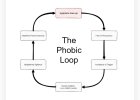
Similarly, some people with ME/CFS may fear pain from triggering or exacerbating existing metabolic symptoms such as mast cell activation syndrome (MCAS), post-exertional malaise (PEM), inflammation, sleep deprivation, etc, leading them to increasingly avoid foods, supplements and people, along with physical and mental activities. This avoidance can result in severe deconditioning, increased isolation, and a greater severity of symptoms, perpetuating a closed-loop / cycle of fear and avoidance.
Repeated experiences of PEM, MCAS, etc., can result in a conditioned, phobic response to certain triggers. This means that the brain starts to associate specific activities - such as physical exertion or even mental tasks - with symptom exacerbation, leading to an increased fear response. The brain, in a state of chronic stress or "under siege", may misinterpret normal sensations as threats, reinforcing feelings of vulnerability and the development of phobic responses to a wide range of stimuli.
This figure will look strikingly familiar to anyone who’s read much BPS ME/CFS research.
IMG_7392.jpeg
Leisk recommends “graded stressor exposure.” His protestations against GET ring hollow to me.
Understanding the powerful connection between the mind and body is crucial. Unregulated fear can perpetuate symptoms, so addressing these emotions is an essential part of recovery. Graded stressor exposure with interoceptive control to reduce salience-hypothalamus coupling to the cue. Expect the transient innate lymphoid cell signature to normalise as exposure succeeds. […] Gradually increasing exposure to normal activities and day-to-day life, along with appropriate pacing, can help desensitize the nervous system and break the fear-avoidance cycle.
There is a section of 9 mantras. Utterly clueless:
8. "I am safe, even when I experience symptoms."
This mantra directly addresses the fear response, offering a powerful message of reassurance. It emphasizes the distinction between experiencing a sensation and being in actual danger. It is particularly helpful in breaking the cycle of fear and avoidance. By repeating this affirmation, people can begin to retrain their nervous systems to associate symptoms with safety rather than threat.
 
But this same guy endorses this (in his Twitter bio), which is also full of bogus stuff.


This thread is old (I actually later wrote a more thorough takedown on BFP where I noted that he tells people to use a rebranded scam printer ink tool to scan their palms) but I wanted to respond to this because you misunderstand the point of this website.

It's an open platform/wiki for anyone to contribute to and write positives or negatives, both for treatments and providers. If you were scammed by someone or think a treatment is nonsense, you're welcome to add a note to it. It does not encourage anything in particular. Note the more reviews something has, the more the rating trends towards 2.5. Might be a signal there for a discerning reader.

Providers and treatments are what folks are looking for, so it's an effective hook to grab them and maybe eventually help them reach the right conclusions. A blank website that says nothing will just send more folks to BFP.
 
Back
Top Bottom