Insights into the Complex Biological Network Underlying Myalgic Encephalomyelitis/Chronic Fatigue Syndrome
[Line breaks added]
Abstract
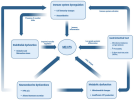
Myalgic encephalomyelitis/chronic fatigue syndrome (ME/CFS) is a debilitating multisystem disorder characterized by immune dysregulation, metabolic impairments, neuroendocrine disturbances, endothelial dysfunction, and gastrointestinal abnormalities.
Immune alterations include reduced natural killer cell cytotoxicity, T-cell exhaustion, abnormal B-cell subsets, and the presence of diverse autoantibodies, suggesting an autoimmune component. Gut dysbiosis and increased intestinal permeability may promote systemic inflammation and contribute to neurocognitive symptoms via the gut–brain axis.
Neuroendocrine findings such as hypothalamic–pituitary–adrenal (HPA) axis hypofunction and altered thyroid hormone metabolism further compound metabolic and immune abnormalities. Metabolomic and mitochondrial studies identify impaired ATP generation, redox imbalance, and compensatory shifts toward alternative energy pathways underlying hallmark symptoms like post-exertional malaise.
Endothelial dysfunction driven by oxidative and nitrosative stress, along with autoantibody-mediated receptor interference, may explain orthostatic intolerance and impaired perfusion.
Collectively, ME/CFS appears to arise from a self-sustaining cycle of chronic inflammation, metabolic insufficiency, and neuroimmune imbalance.
Web | DOI | International Journal of Molecular Sciences | Open Access
Dudova, Dobrina; Bozhkova, Martina; Petrov, Steliyan; Nikolova, Ralitsa; Kalfova, Teodora; Ivanovska, Mariya; Vaseva, Katya; Nikolova, Maria; Ivanov, Ivan N.
[Line breaks added]
Abstract
Myalgic encephalomyelitis/chronic fatigue syndrome (ME/CFS) is a debilitating multisystem disorder characterized by immune dysregulation, metabolic impairments, neuroendocrine disturbances, endothelial dysfunction, and gastrointestinal abnormalities.
Immune alterations include reduced natural killer cell cytotoxicity, T-cell exhaustion, abnormal B-cell subsets, and the presence of diverse autoantibodies, suggesting an autoimmune component. Gut dysbiosis and increased intestinal permeability may promote systemic inflammation and contribute to neurocognitive symptoms via the gut–brain axis.
Neuroendocrine findings such as hypothalamic–pituitary–adrenal (HPA) axis hypofunction and altered thyroid hormone metabolism further compound metabolic and immune abnormalities. Metabolomic and mitochondrial studies identify impaired ATP generation, redox imbalance, and compensatory shifts toward alternative energy pathways underlying hallmark symptoms like post-exertional malaise.
Endothelial dysfunction driven by oxidative and nitrosative stress, along with autoantibody-mediated receptor interference, may explain orthostatic intolerance and impaired perfusion.
Collectively, ME/CFS appears to arise from a self-sustaining cycle of chronic inflammation, metabolic insufficiency, and neuroimmune imbalance.
Web | DOI | International Journal of Molecular Sciences | Open Access