Trial Report Clinical Improvements Following a Non-Aerobic Therapeutic Exercise in Women with Long COVID, 2025, Miana et al

forestglip

Moderator
Staff member
Clinical Improvements Following a Non-Aerobic Therapeutic Exercise in Women with Long COVID

Miana, María; Moreta-Fuentes, César; Moreta-Fuentes, Ricardo; Varillas-Delgado, David; Jiménez-Antona, Carmen; Laguarta-Val, Sofía

[Line breaks added]

Background/Objectives: Long COVID (LC) is characterized by persistent symptoms such as fatigue, pain, and reduced quality of life, often lasting months after acute infection. Exercise-based interventions have shown promise, but evidence for non-aerobic programs remains limited. This study aimed to evaluate the effects of a 12-week motor control exercise program on body composition and fatigue in women with LC and to explore associations with physical activity and psychosocial factors.

Methods: An exploratory pre–post non-controlled intervention study was conducted in 17 women with LC symptoms persisting for over one year. Participants completed 24 individualized sessions of a non-aerobic therapeutic exercise program focused on trunk stabilization.

Outcomes included body composition (bioimpedance analysis), fatigue (Modified Fatigue Impact Scale), health-related quality of life (EQ-5D-5L), physical activity (IPAQ), and kinesiophobia (TSK-11). Paired t-tests, effect sizes, correlations, and regression models were applied.

Results: The intervention significantly reduced total body fat (37.09% to 35.41%, p < 0.001) and trunk fat (35.82% to 33.82%, p < 0.001), with large effect sizes. Physical and psychosocial fatigue improved markedly (MFIS physical: 29.71 to 21.06, p < 0.001; psychosocial: 6.00 to 4.29, p = 0.001), while cognitive fatigue showed non-significant change. Pain/discomfort scores decreased substantially (2.86 to 1.79, p < 0.001).

Vigorous activity and walking time increased, and sedentary time decreased. No significant changes were observed in muscle mass or kinesiophobia.

Conclusions: A structured, non-aerobic exercise program can effectively reduce body fat, alleviate fatigue, and improve pain perception in women with LC, supporting its role in rehabilitation. Multimodal strategies may be required to address cognitive symptoms and fear of movement.

Web | DOI | PMC | PDF | Journal of Clinical Medicine | Open Access
 
Clinical manifestations are diverse and frequently include persistent fatigue, dyspnea, cognitive deficits, sleep disturbances, myalgia, headaches, impaired concentration, and psychological symptoms such as anxiety and post-traumatic stress.

Not sure why the following needs to be stated twice. I guess when you don't have reliable evidence just repeating the lie should work?

Beyond LC, non-aerobic exercise modalities have demonstrated benefits in other medically unexplained fatigue conditions, such as chronic fatigue syndrome (CFS) and fibromyalgia. Non-aerobic exercise modalities have shown benefits in conditions like chronic fatigue syndrome and fibromyalgia, suggesting potential for LC rehabilitation.

Aerobic exercise improves LC symptoms but may not be tolerated by all patients, highlighting the need for non-aerobic alternatives. However, these approaches may not be suitable for all patients, particularly those experiencing post-exertional malaise or severe fatigue. Non-aerobic interventions, including resistance training, core stabilization, and mind–body practices like tai chi and qigong, have shown promising results in related conditions such as chronic fatigue syndrome and fibromyalgia

However, tolerance varies considerably, and a substantial proportion of LC patients—particularly those experiencing post-exertional malaise—may not tolerate aerobic exercise.

An exploratory pre–post non-controlled intervention study was conducted […] attend a screening appointment with the Rehabilitation Physician […] resulting in an initial sample of 17 women. Compliance was 100%, and no participants dropped out during the 12-week intervention period.
 
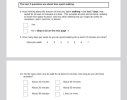
The Tampa Scale of Kinesiophobia (TSK-11) was administered at both pre- and post intervention time points to assess fear of movement and (re)injury. The TSK-11 is a shortened version of the original 17-item instrument, excluding items 4, 8, 9, 12, 14, and 16. […] The total score is calculated by summing the responses across the 11 items, yielding a possible range from 11 to 44 points. Higher scores reflect greater levels of kinesiophobia, indicating a stronger fear of movement or reinjury. Interpretation of the TSK-11 is based on the total score, where a minimum score of 11 denotes negligible or absent kinesiophobia, and a maximum score of 44 indicates a severe fear of movement due to anticipated pain or injury. This scoring framework allows for the quantification of psychological barriers to physical activity, which may influence rehabilitation outcomes and adherence to exercise-based interventions.

Question from the back of the class. What score would you expect for someone with an uncasted both-bone mid-shaft forearm fracture? Does that indicate a psychological barrier to physical activity, rehabilitation and exercise-based interventions?

Participants engaged in a therapeutic exercise program designed to promote correct body alignment and optimal biomechanics […] The intervention focused on trunk stabilization through plank-based exercises […] Each session was structured into three phases: a 10 min warm-up, a 40 min core training segment, and a 10 min cool-down. The warm-up included 3 min of specific exercises (e.g., wall sits), 1 min of anterior plank on elbows and feet, 50 sit-ups, and 1 min of sustained sit-ups.

That's the warm-up.

The core training phase focused on trunk musculature and incorporated exercises targeting the abdominal muscles, gluteus maximus and medius, pelvic bridge, and various plank positions (anterior plank on elbows or hands with extended arms, and side plank). The cool-down phase consisted of breathing exercises, stretching, and muscle relaxation techniques.

Participants progressively increased their workload throughout the intervention. In the initial sessions, they performed between 150 and 200 sit-ups per class, reaching 300 to 400 repetitions by the end of the program.

no participant experienced adverse effects or required discontinuation of the program.

Erm. I'm pretty confident we can say none of these patients had ME/CFS.

Following the intervention, several dimensions of physical activity assessed by the IPAQ showed meaningful changes. Notably, vigorous physical activity (IPAQ-1) significantly increased from 0.77 to 1.85 days per week (p = 0.048, ES = −0.698), indicating a substantial improvement in high-intensity exercise engagement. Similarly, time spent walking (IPAQ-4.2) rose markedly from 27.50 to 63.75 min per day (p = 0.041, ES = −1.415), and the number of days walking at least 10 min (IPAQ-4.1) decreased significantly from 1.80 to 1.03 (p = 0.020, ES = 1.789). Additionally, time spent sitting on weekdays (IPAQ-6) decreased significantly from 1.57 to 1.13 h (p = 0.036, ES = 1.069), suggesting a reduction in sedentary behavior.

I don't know anyone that sits only for an hour or two: sick or healthy. As best I can see the normal range should be at least 6-7 hours.
 
Changes in kinesiophobia were evaluated using the TSK-11. The total score showed a slight reduction from 24.29 pre-intervention to 23.29 post-intervention, with no statistically significant difference and a small effect size (p = 0.863, ES = 0.172). This suggests that the intervention had a limited impact on overall fear of movement or reinjury. Among individual items, the greatest improvements were observed in the statements “I’m afraid that I might injure myself if I exercise” and “Pain always means I have injured my body,” with moderate effect sizes although neither reached statistical significance (p = 0.112, ES = 0.473 and p = 0.219, ES = 0.387, respectively). These trends may indicate a partial shift in pain-related beliefs and attitudes toward physical activity.

Conversely, some items showed minimal or even negative changes, such as “My body is telling me I have something dangerously wrong” and “My accident has put my body at risk for the rest of my life,” with negligible effect sizes and non-significant p-values. Interestingly, the item “I wouldn’t have this much pain if there weren’t something potentially dangerous going on in my body” increased slightly post-intervention, suggesting a potential reinforcement of maladaptive beliefs in some participants.

Maybe some did have PEM after all?

Overall, while the intervention did not significantly reduce kinesiophobia, certain cognitive aspects related to fear of movement showed promising trends that warrant further investigation in larger samples or with more targeted psychological strategies.

Of course. Always with the "promising."

no significant correlations were observed between muscle mass change and MFIS or TSK-11, suggesting that psychological factors may have a limited direct influence on muscle hypertrophy in this context.

Or maybe your questionnaires are not fit for purpose. (Perhaps they can be rehabilitated.)
 
Not sure why the following needs to be stated twice. I guess when you don't have reliable evidence just repeating the lie should work?
Repeating a previous statement or claim, just with slightly different wording, is something that AI generated text frequently does.

--------

Participants engaged in a therapeutic exercise program designed to promote correct body alignment and optimal biomechanics

And the evidence for patients having significantly greater incorrect body alignment and sub-optimal biomechanics compared to the general population is...?

The total score showed a slight reduction from 24.29 pre-intervention to 23.29 post-intervention, with no statistically significant difference and a small effect size (p = 0.863, ES = 0.172).

Or kinesiophobia isn't a factor.

Or maybe your questionnaires are not fit for purpose. (Perhaps they can be rehabilitated.)
How do you expect to succeed in modern BPS medicine with that attitude, Dr G?
 
Last edited:
Similarly, time spent walking (IPAQ-4.2) rose markedly from 27.50 to 63.75 min per day (p = 0.041, ES = −1.415), and the number of days walking at least 10 min (IPAQ-4.1) decreased significantly from 1.80 to 1.03 (p = 0.020, ES = 1.789).
So they walked more overall, but had more days where they walked less then 10 minutes?
Does the time spent walking only include days where they walked more then 10 minutes?
 
Yeah that seemed odd, but I guess it means they walked more minutes so the category count of "walking at least 10 minutes" decreased allowing the category count of eg "walking at least 30 minutes" to go up.
 
Back
Top Bottom