Review Chronic fatigue syndrome: From etiology and mechanism to diagnosis and treatment 2026 Ren et al

Andy

Senior Member (Voting rights)
Abstract

Myalgic encephalomyelitis (ME), commonly known as chronic fatigue syndrome (CFS), is a long-lasting neurological disease. The cause of ME remains uncertain, characterized by unrelenting or recurring fatigue not alleviated by rest. In recent times, CFS incidence has been on the rise annually, showing a tendency towards younger sufferers. Especially post-COVID-19, its prevalence has surged, posing a significant threat to 21st-century health. CFS symptoms are intricate and diverse. Patients typically endure extreme fatigue lasting over six months, accompanied by physical and neuropsychiatric symptoms like sore throat, muscle/joint pain, anxiety, and distress. These severely disrupt daily life and work, heightening illness risks and financial strain. With the unknown etiology, current treatments have limited success and may induce psychological issues such as anxiety and depression.

This paper delivers an extensive and thorough overview of the latest developments in the studies concerning the pathogenesis, diagnostic standards, and therapeutic approaches for chronic fatigue syndrome. Integrating and assessing the existing knowledge body related to this field systematically, we aim to facilitate continuous research and gain a deeper understanding of this complex medical problem whose mechanism remains largely unknown. Moreover, valuable insights and practical recommendations for future related treatments and research are also provided.

Paywall
 
Patients typically endure extreme fatigue lasting over six months, accompanied by physical and neuropsychiatric symptoms like sore throat, muscle/joint pain, anxiety, and distress.
No mention of PEM. Emphasis on psychological symptoms that aren't listed in any diagnositic criteria.

Null points from me.

Edit to add: The authors are in China, where we see a lot of studies coming from that assume ME/CFS is chronic fatigue.
Published in the Journal of Psychiatric Research.

So I conclude this is not a paper about ME/CFS.
 
Another Chinese overview paper, this one from a Hangzhou team:

Center of Safety Evaluation and Research, Key Laboratory of Drug Safety Evaluation and Research of Zhejiang Province, Hangzhou Medical College, Hangzhou, Zhejiang, 310053, China

Moreover, valuable insights and practical recommendations for future related treatments and research are also provided.
I'm interested to know if 'recommendations for future related treatments' are some new tonic that Hangzhou Medical College has a financial interest in, or if the thinking is better than that.

China is a big country. There could be a lot of research fire power applied to the problem of ME/CFS if researchers can avoid getting side tracked by BPS thinking and supplements supported by bad quality trials.
 
I'm interested to know if 'recommendations for future related treatments' are some new tonic that Hangzhou Medical College has a financial interest in, or if the thinking is better than that.
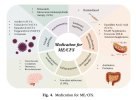
Seems to be a mix of stuff that we've all heard of (LDN, Rituximab, CoQ10, antivirals, etc.) with a load of Traditional Chinese Medicine woo on top.

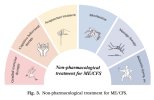
1000097564.jpg
1000097566.jpg
For instance, in traditional Chinese medicine theory, various physicians hold different views, but it is generally believed (a mainstream consensus (Liu et al., 2024)) that CFS arises from visceral dysfunction and deficiency of ‘qi, blood, and spirit’ due to weak innate endowment, excessive work, dietary disorders, or prolonged illness.

On CBT and GET, they present 'both sides' but don't take much of a position on which view is best supported by the evidence ("considerable debate tho").
Exercise therapy is regarded as a possible intervention for chronic fatigue syndrome, aiding in the alleviation of fatigue and enhancement of physical functioning in individuals, though it does not lead to notable advancements in depressive symptoms (Larun et al., 2019). A study from Australia (Casson et al., 2023) showed that an activity modification intervention, in which ME/CFS patients were encouraged to gradually increase their activity levels, was effective in reducing fatigue and psychological distress and improving their physical functioning. In a study by Abigail Smakowski et al. (2022) it was demonstrated that graded exercise therapy (GET) resulted in notable improvements in the severity of fatigue, physical functioning, and work and social adaptations in patients diagnosed with chronic fatigue syndrome. This was achieved by gradually increasing the amount and intensity of exercise in a clinical setting. Recent studies have indicated that certain clinicians propose (Van Rhijn-Brouwer et al., 2024) that graded exercise therapy may not be advisable for patients with long-term COVID who experience post-exertional malaise. They contend that therapies focusing on exercise often adversely affect the well-being of individuals suffering from ME/CFS, noting that for long-term COVID patients, exercise can be closely associated with irregular immune and metabolic reactions in skeletal muscle (Appelman et al., 2024). Therefore, it is crucial to assist those with long-term COVID and post-exertional malaise in managing their daily activities according to their energy capacity or “energy envelope". (Sanal-Hayes et al., 2023).
Cognitive behavioral therapy (CBT) is a form of psychotherapy that is structured and typically short-term, created by A.T. Beck during the 1960s (Butler et al., 2006). It aims to treat psychiatric disorders like anxiety and depression, along with psychological issues stemming from irrational thought processes (Kmietowicz, 2021). The approach is centered on addressing the patient's irrational cognitive processes and modifying psychological issues by influencing their perception and attitude toward themselves, others, and the surrounding environment. As a non-pharmacological treatment modality based on the model of ME/CFS, it is designed to educate and guide patients in identifying and modifying negative perceptions of fatigue, physical discomfort, and daily activities. Additionally, it aims to facilitate the establishment of healthy thinking patterns, emphasizing gradual behavioral changes and emotional regulation to reduce ME/CFS symptoms and improve patients' quality of life (Kmietowicz, 2021). Nevertheless, the efficacy and practicality of cognitive-behavioral therapies remain a topic of considerable debate. Research indicates (Kuut et al., 2024) that various types of CBT have varying therapeutic effects on ME/CFS. Patients with ME/CFS who exhibit depressive symptoms tend to experience lesser reductions in fatigue and are more likely to remain severely fatigued post-treatment when compared to their counterparts without such symptoms in Internet-based CBT. Conversely, in both individual and group face-to-face CBT settings, no notable differences were observed in the treatment outcomes regarding fatigue severity between patients with depressive symptoms and those without (Kuut et al., 2024). O'DOWD H. et al. (O'dowd et al., 2006) demonstrated that CBT was an efficacious intervention for treating fatigue, mood, and physical health symptoms in ME/CFS. However, the study did not find that CBT improved cognitive function or quality of life.
Previously, CBT and GET were recommended as treatments for patients with ME/CFS. The theory of illness is based on the premise that the symptoms and disabilities of ME/CFS are primarily caused by maladaptive illness beliefs and coping behaviors (Ax et al., 2001; Geraghty et al., 2019). Nevertheless, the methodology of GET and CBT studies has been subjected to considerable criticism, as have the theories of disease that underpin them. These studies have been accused of failing to adequately track hazards and of being at odds with the evidence for multisystem biologic injury (Wilshire et al., 2018). In light of these concerns, CDC and numerous national health agencies have since removed recommendations for CBT an GET in 2015 (Zhang et al., 2019). Additionally, other countries and regions are in the process of updating relevant guidelines in accordance with these developments (Vink and Vink-Niese, 2022).
 
Back
Top Bottom